Buildcheck: AI for finding inconsistencies in construction designs
Buildcheck combines AI analysis and expert validation to review construction drawings and identify issues that deserve attention.
Voices depend on your browser and device; some require internet access. Code blocks are not read aloud.
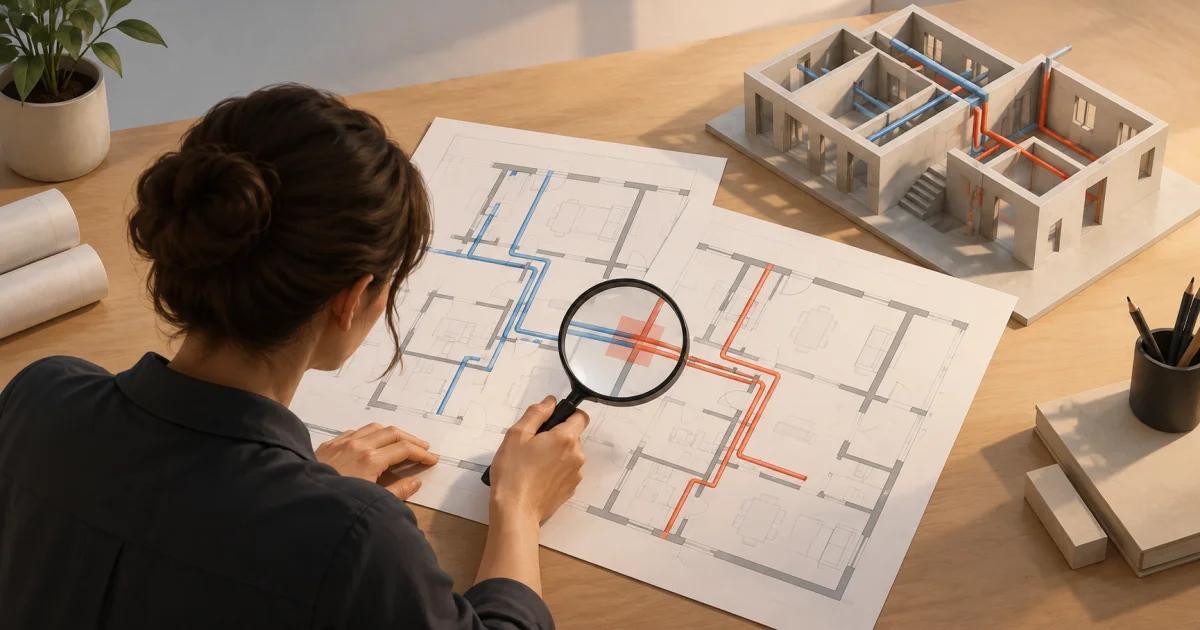
A detail that differs between two drawings may seem minor until it is time to carry out the construction work. That is why reviewing a design also means checking that information from different disciplines fits together.
Buildcheck applies artificial intelligence to the review of construction drawings. The company presents the tool as a way to identify errors, omissions, and coordination problems before they progress to later project stages. Visit the official website.
What does it look for in the documents?
In the company's materials, the approach includes analyzing sets of PDF drawings and flagging information that the team needs to check. This can involve inconsistencies between documents, missing details, and conflicts between disciplines.
Buildcheck also describes a workflow that combines automated analysis with expert validation before delivering the findings. Its offering therefore involves a review process with human participation. See how the company presents this work.
An example to picture it
Imagine a set of designs in which a piece of information was changed on one drawing sheet but remains different on another. In an illustrative scenario, the system could flag the inconsistency so those responsible could check which version is correct.
The potential gain is making the problem visible early. The team then has a concrete issue to resolve, linked to the documents, instead of relying on someone to notice the discrepancy during construction.
Why is it worth following?
I find it interesting to see an AI application working with technical materials that professionals already use. Its value needs to show up in the quality of the issues it finds and how easy it is to route them for resolution.
A huge list of alerts, for example, can create additional work if there is no clarity about what each observation means. I would pay attention to the location of the problem, the explanation provided, and the ability to track its correction.
What to consider before signing up
I would begin with a set of documents the team knows well. This would make it possible to check whether the observations are relevant and whether they help the professional responsible review the design.
I would also confirm which disciplines, formats, and technical references are covered. For use in Brazil, suitability for local standards and requirements needs to be addressed specifically, along with the turnaround time for the review.
The Buildcheck website offers a way to get in touch and discuss its application to a company's work. It joins this series for its potential to support an important task: finding questions and inconsistencies while there is still an opportunity to resolve them in the design.
Official information accessed on 21/10/2026.