fal: a bridge between your application and image, video, and audio models
fal brings together media generation models and infrastructure for developers. See how it could fit into an AI product.
Voices depend on your browser and device; some require internet access. Code blocks are not read aloud.
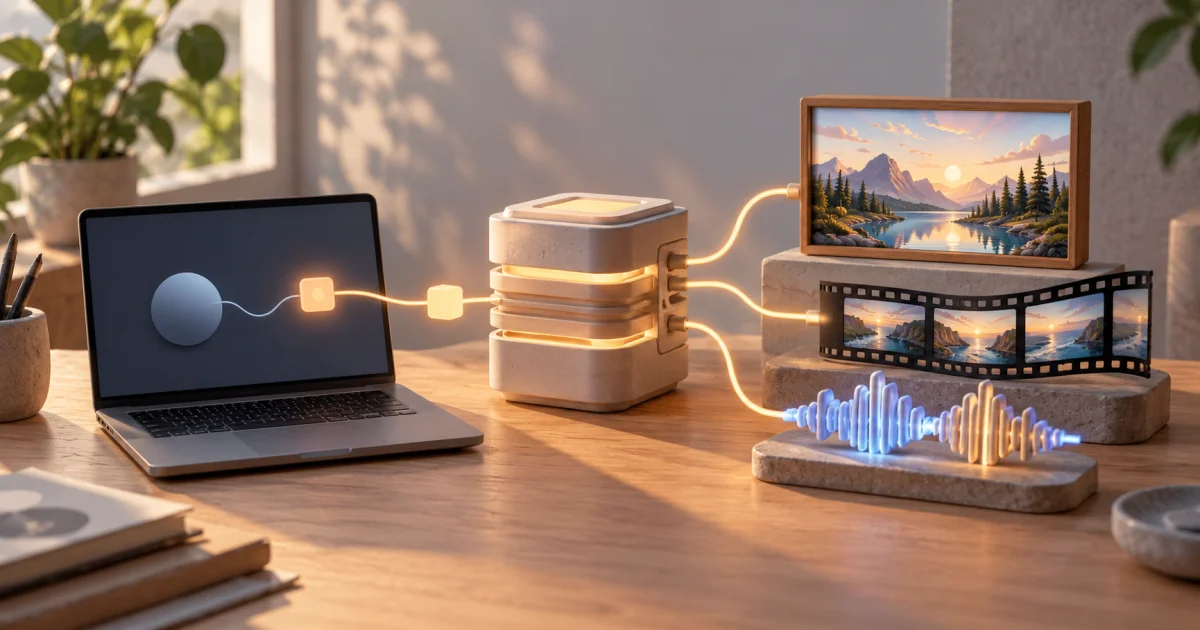
You have an idea for an application that creates images or turns a script into a video. A very practical question soon comes up: where will that generation happen? fal offers a way to handle this part of the project.
The platform brings together artificial intelligence models for images, video, audio, and other media, along with infrastructure for running models. Its audience includes developers who want to incorporate these capabilities into their own products. See what fal offers.
How does it fit into an application?
One entry point is through model APIs. Put simply, your system sends a request, such as text or an image, to a model available on the platform and receives the corresponding result.
The official documentation also describes options for hosting your own models and using infrastructure with GPUs, the processors used in many AI tasks. These are different possibilities: integrating an existing model and operating a custom solution call for different decisions.
Let's imagine a use case
Think of a tool that helps small businesses prepare visual materials. In a hypothetical example, the user describes a scene, the application sends the request to an image model, and then lets them review and download the result.
fal could provide the generation step. The developer would still need to handle the experience, usage rules, history, and how to charge for the service. This division of responsibilities helps explain what makes the platform useful.
Another approach would be to test different models on the same task before choosing one. The documentation describes environments for experimentation and comparison, which can help you discover what best suits your project.
What makes the approach interesting?
For me, the appeal is the ability to experiment with media capabilities inside a product without starting by setting up all the infrastructure to run them. That can leave more room to focus on the user's needs.
I would start with a few representative examples. One beautiful image does not answer everything: it also matters whether the model preserves important details, how long it takes, and how it behaves when the request becomes more difficult.
Costs and terms of use vary depending on the capability you choose. Check the specific model's page, its parameters, and its commercial terms before shaping your application's offering. The fal website and its documentation are the best starting points.
Official sources consulted on October 21, 2026.