Legora: AI to turn legal analysis into documents
Legora connects document review and legal drafting, with source references and collaboration among professionals.
Voices depend on your browser and device; some require internet access. Code blocks are not read aloud.
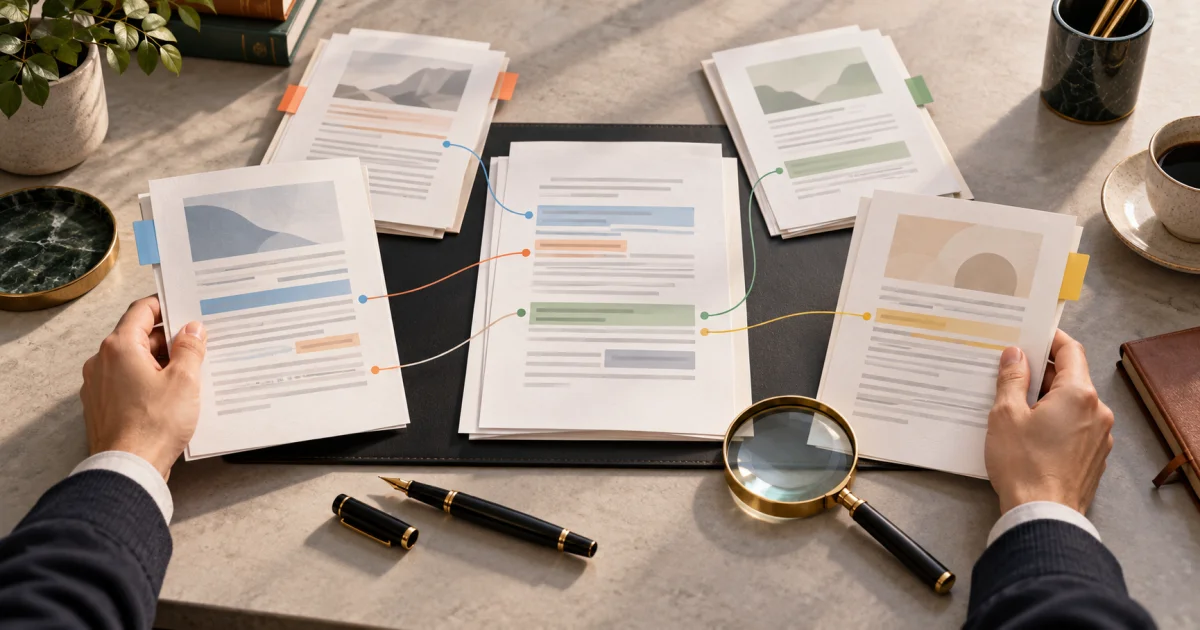
Reading several contracts is one task. Turning the observations into a clear document that someone else can review is another. Between those stages, important details can get lost in notes, spreadsheets, and file versions.
Legora develops AI tools for legal work. Its Editor, for example, is a drafting environment that draws on analyses and research carried out on the platform to prepare documents.
From analysis to text
The official Editor page describes creating documents with references to the underlying material. It also presents real-time collaboration, suggested adjustments that can be accepted or rejected, and export to Word.
The appeal lies in the connection between documented reasoning and the final text. For a team, knowing where a statement came from helps them review the wording and check whether it accurately represents the material analyzed.
Multiple documents, one organized view
Another tool is Tabular Review. It organizes information extracted from documents into a spreadsheet-like structure, with comparison features, filters, and source references.
Each cell can be explored to consult the original material. This format can make it easier to locate differences and prepare a more detailed review.
It is useful to think of this as support for organizing questions about the set of files: what information appears in each one, where is it, and what needs attention?
An illustrative scenario
Imagine a legal team reviewing service contracts. They want to compare deadlines, renewal methods, and delivery obligations.
The team could structure this analysis and then prepare a document with the main points. During review, the professionals would return to the original clauses to check wording, exceptions, and attachments before reaching any interpretation.
The example shows why a reference is valuable, but also why it needs to be opened. A clause taken on its own may have its meaning altered by another part of the contract.
Why follow Legora?
I see potential in the continuity between reading, organizing, and drafting documents. When these stages work together more effectively, the team can give more attention to points that require professional analysis.
To assess the tool, a good test uses familiar documents and questions whose answers can be checked. Look for omissions, correct references, and differences between what the text states explicitly and what has been inferred.
It is also necessary to check the conditions for using the documents and how confidential information is handled. The final legal content needs to be reviewed in light of the case and the applicable jurisdiction.
Legora's approach is interesting when it helps professionals follow the path between the source consulted and the document that will be delivered.
Official sources consulted on October 21, 2026.