Photon: a bridge between AI agents and messaging apps
Get to know Photon and its Spectrum framework, which connects AI agents to conversation channels, with a look at the available integrations.
Voices depend on your browser and device; some require internet access. Code blocks are not read aloud.
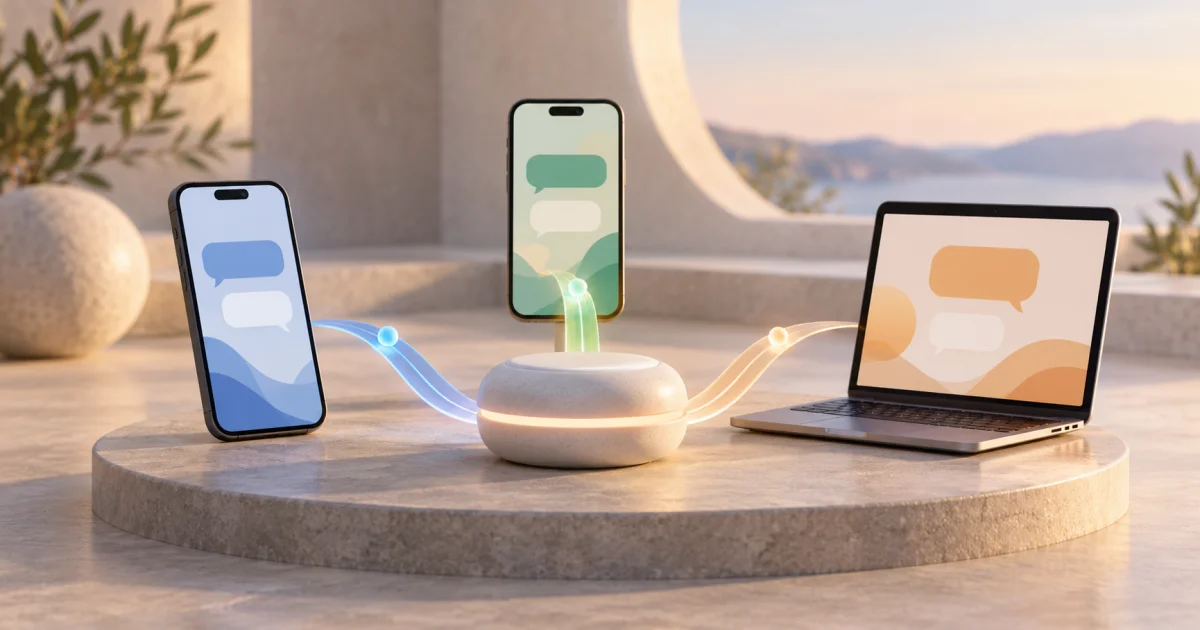
You can create an AI agent with good instructions and a clearly defined role. The next question is very practical: where will people talk to it? Photon comes into the picture at this meeting point between the agent and messaging apps.
The project presents an open framework for bringing agents to different communication interfaces. Instead of requiring every user to visit a new screen, the aim is to bring AI closer to the spaces where conversations already happen. Get to know Photon.
The piece that makes the connection
The documentation calls the framework Spectrum. Think of it as a set of building blocks for developers: the agent server handles behavior and tools; connectors handle receiving and sending messages in each channel.
The documentation consulted lists support for iMessage, WhatsApp Business through the official API, Telegram, and a terminal interface for development. Other environments may require custom connectors. This detail matters: the channels mentioned in the project's general overview do not necessarily have the same level of ready-to-use support.
Photon therefore plays a part in building an application. You still need to decide which AI model to use, which information it can consult, and which actions will be available.
An example to picture it
As an illustrative scenario, imagine a company preparing an assistant that answers questions about its services. The team wants to start with Telegram and then assess WhatsApp Business. A shared framework can help keep the support logic organized while each connection handles the details of its own channel.
The initial exercise could be simple: ask familiar questions, observe the answers, and check how the conversation reaches a person when help is needed. That is where a demonstration starts to become a usable project.
Why is it worth following?
The interest lies in conversation infrastructure. As more teams create agents, less eye-catching tasks emerge, such as organizing messages, handling events, and dealing with differences between channels. These are precisely the pieces that support the experience of the person on the other end.
To assess Photon, I would start with one channel and a small goal. I would check account requirements, how the connector works, and the limits on the agent's actions. I would also test repeated messages, connection failures, and requests outside the scope: common situations that deserve clear handling.
The Spectrum introduction guide is the best starting point for understanding what is already available. For people developing agents, Photon offers an interesting proposition: treating conversation as a central part of the product.
Information consulted in official sources on October 21, 2026.