Sereact: AI that helps robots pick products in warehouses
Meet Sereact, which applies AI to the perception and movement of robots used to pick and handle products.
Voices depend on your browser and device; some require internet access. Code blocks are not read aloud.
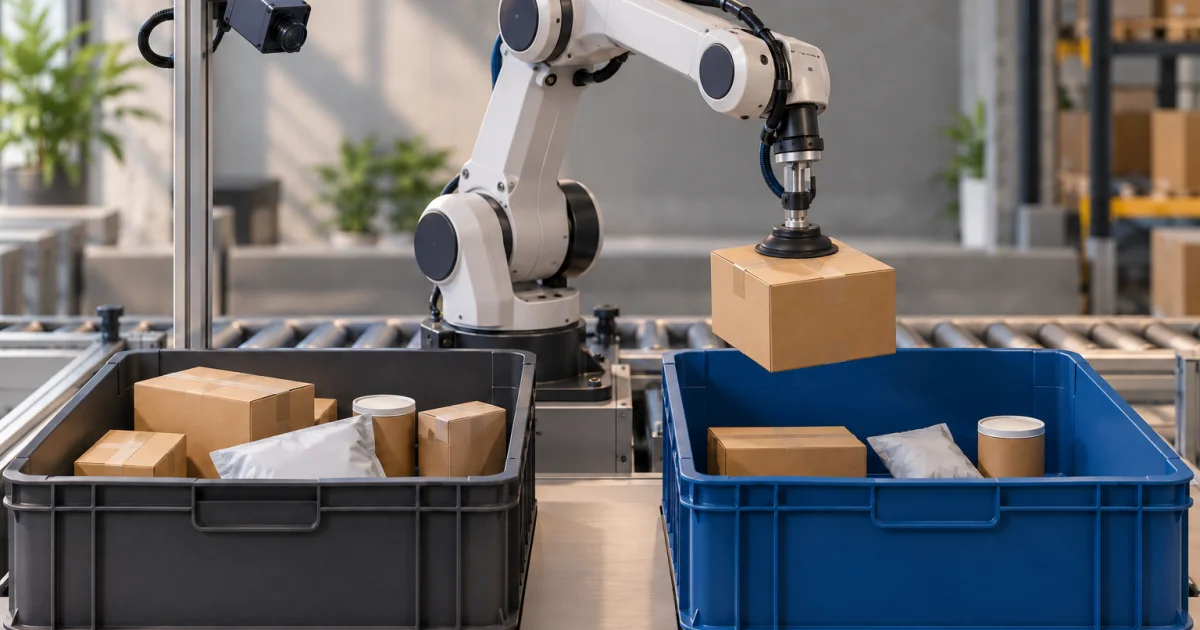
A rigid box, a crumpled package, and a small product may arrive together at the same picking station. Noticing these differences seems natural to a person. Automating the task means turning perception into movement.
Sereact develops artificial intelligence for this meeting point between software and the physical world. Its platform supports robots in activities such as picking, placing, sorting, and inspecting items. The company focuses on warehousing and logistics environments. Meet Sereact.
How does this show up at work?
For its pick and place solution, which involves picking objects up and placing them, the company describes a system that identifies objects, plans how to grasp them, and adjusts the movement as the task unfolds. The aim is to handle the variety of products found in a real operation.
The page also presents item verification features and integration with warehouse material handling workflows. The required combination depends on the installation. Explore its robotic picking approach.
An example to picture it
Think of an e-commerce operation preparing orders with products of different shapes. A robotic arm needs to take an item out of a box and place it in the right destination. If the package changes position, repeating exactly the same movement may stop working.
This illustrative scenario helps explain the interest in AI that tracks an object and guides the action. For the operation, the value would lie in performing the task consistently under the conditions it actually faces.
Why is it worth following?
Sereact stands out for working on a very concrete application: moving goods. For anyone familiar with warehouse routines, this connection between identifying a product and carrying out a task may be easier to assess than a general promise of automation.
I would start a project like this by looking at one specific station. Which items pass through it? Are there fragile, deformable, or very different packages? How does the team handle an exception?
Those answers help plan a useful demonstration using the company's own products and quality criteria. They also make it possible to compare the result with the current process, considering equipment, maintenance, and integration.
To learn about the solution, Sereact's official website provides product information and a contact for demonstrations. Its potential lies in bringing robotics closer to the variety that exists outside a perfectly organized setting.
Official sources consulted on October 21, 2026.