Treble: sound simulations to improve AI applications
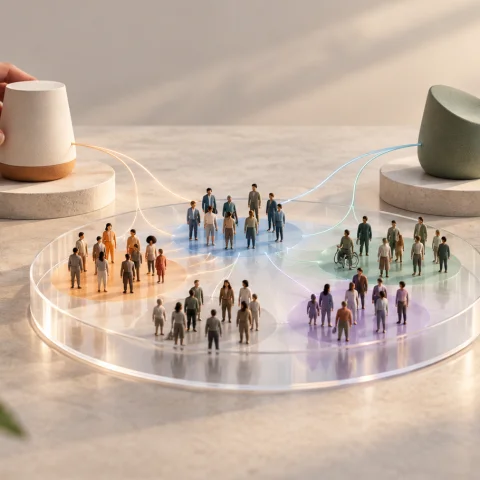
Treble simulates acoustic environments and generates audio data for research and development. Learn how this relates to products that need to listen.
Voices depend on your browser and device; some require internet access. Code blocks are not read aloud.
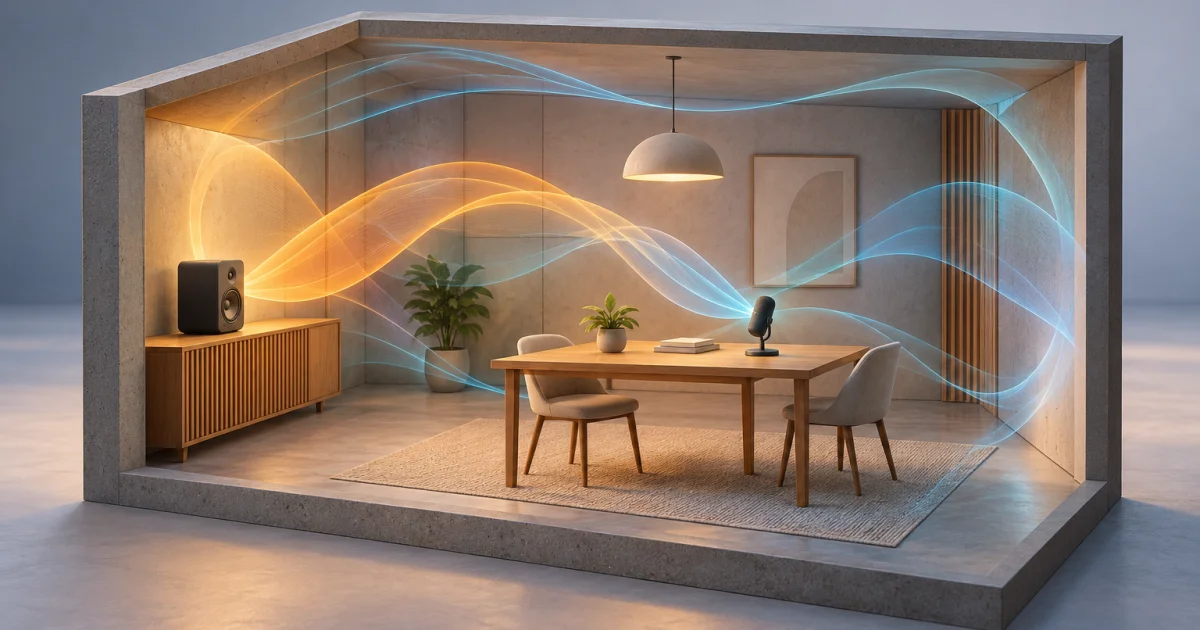
Talking to an assistant in a quiet room is one experience. Trying to do the same thing near a lively conversation, with echoes and a distant microphone, is another story.
Treble works precisely with the conditions in which sound travels. The company offers acoustic simulation and synthetic audio generation tools for applications that include architecture, devices, and artificial intelligence development. Explore the official website.
What is synthetic audio in this context?
Here, the term refers to data produced through simulation. Environments, sound sources, and listening positions can be represented to study how audio would behave under certain conditions.
In AI, Treble presents these capabilities as support for training and evaluating models that work with sound. Its offering includes a developer toolkit, with Python integration and processing for different scenarios. See the machine learning and AI page.
This lets you consider very practical questions: what changes when the microphone is in another position? How does the environment alter the speech it captures? Which situations need to be included in product testing?
An example to picture
Imagine a team developing a device that responds to voice commands. In an illustrative scenario, they could compare situations involving rooms of different sizes, noise sources, and varying user positions.
Simulation would help explore these combinations and identify conditions that deserve attention. Afterward, tests with the device and real environments would remain important to check whether the observed behavior holds up.
The interesting part is being able to investigate alternatives before having to collect new audio in the physical world for every question.
Why is it worth following?
Many people judge an AI by the answer it delivers. In voice applications, however, the quality of the sound reaching the system is also part of the experience.
I see Treble as one piece of this work: providing ways to study the acoustic environment and prepare evaluation conditions. It is an application that works behind the scenes but can influence a product's everyday use.
For a team, I would start with a scenario they already know and compare the simulation with reference measurements or recordings. I would also check which characteristics of the device and environment are being represented.
Who might be interested?
The approach makes sense for audio professionals, teams developing devices, and speech system researchers. The company itself also presents applications in room acoustics.
Treble is part of this series because it shows how AI depends on careful work around the models: creating conditions for audio systems to be developed and evaluated in varied scenarios.
Official information consulted on 21/10/2026.