Vapi: tools for creating AI agents that hold voice conversations
Vapi helps developers build voice agents connected to systems. See how this approach works and what to look for in the experience.
Voices depend on your browser and device; some require internet access. Code blocks are not read aloud.
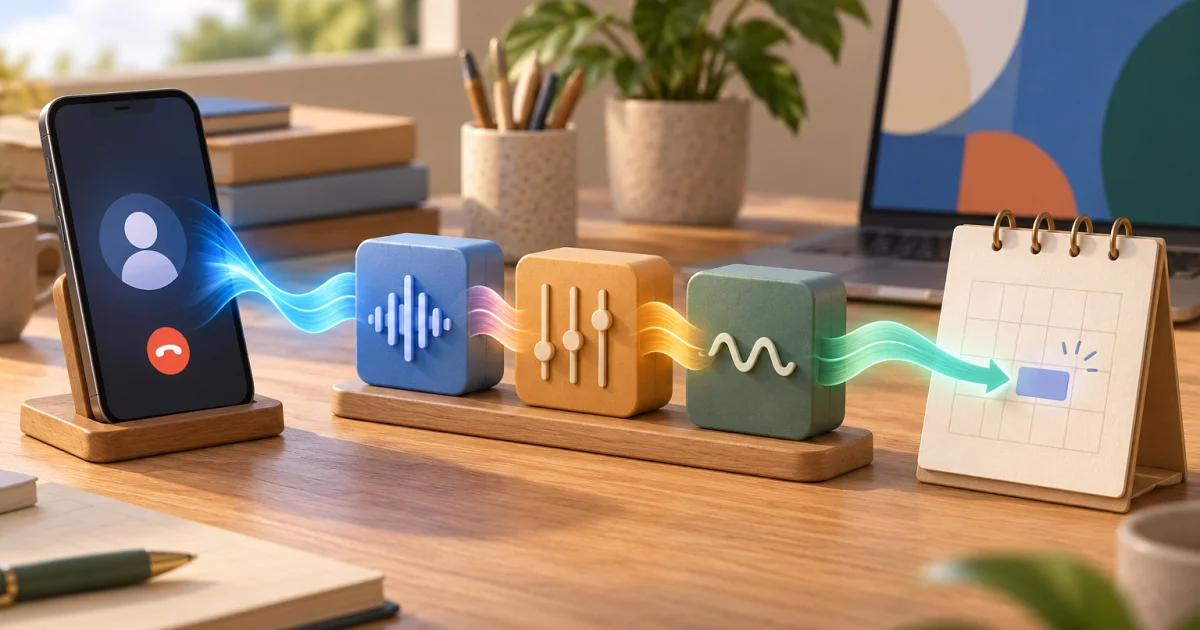
A voice conversation has its own rhythm. The person pauses, changes the question, corrects a piece of information, and expects the service to keep up. Creating AI for this type of interaction involves several components working together.
Vapi offers tools for developers to build voice agents, test conversations, and monitor their operation. The platform presents applications in customer service and other processes that depend on dialogue. Meet Vapi.
What happens behind the conversation?
The introductory documentation explains the combination of speech recognition, a language model, and voice generation. Put simply, the system turns audio into information it can process, prepares a response, and delivers it in spoken form.
Vapi lets you configure these components and connect the agent to tools and systems through APIs, interfaces that allow programs to communicate. The documentation also covers agents that make and receive calls.
This gives the development team resources to define both the conversation and the actions that may follow from it.
An imaginary booking
Think of a company that receives appointment requests by phone. In an illustrative example, an agent could ask which service the person wants and consult a connected calendar to present options.
For this experience to work, the application would need authorized access to the available times and clear rules about bookings. It would also be necessary to define what to do when a request falls outside the expected workflow.
The appeal lies in linking the conversation to a concrete task. The customer needs to understand the options, confirm their choice, and receive information consistent with what was recorded.
What deserves attention during testing?
I would start by listening to conversations with common situations: unusual names, date corrections, pauses, and background noise. These details help reveal whether the agent follows the person naturally.
I would also check whether the system distinguishes a question from a confirmation. In a booking, “is that time available?” and “you can book that time” represent different moments in the process.
The team should be able to follow what happened and adjust the workflow when necessary. A useful outcome shows up in a correctly completed task and a clear experience.
Why is it part of this series?
I see potential in platforms that bring together the components needed to develop a voice experience connected to real work. This lets teams investigate specific applications without building every component from scratch.
Vapi is an option to explore in this field. Its value depends on how the conversation, integrations, and service rules are put together to meet the needs of the person on the other end of the line.
Official information consulted on 21/10/2026.