Tripo AI: turn ideas and images into 3D models
Tripo AI generates 3D models from text and images. See how it could fit into the creation of prototypes, objects, and visual projects.
Voices depend on your browser and device; some require internet access. Code blocks are not read aloud.
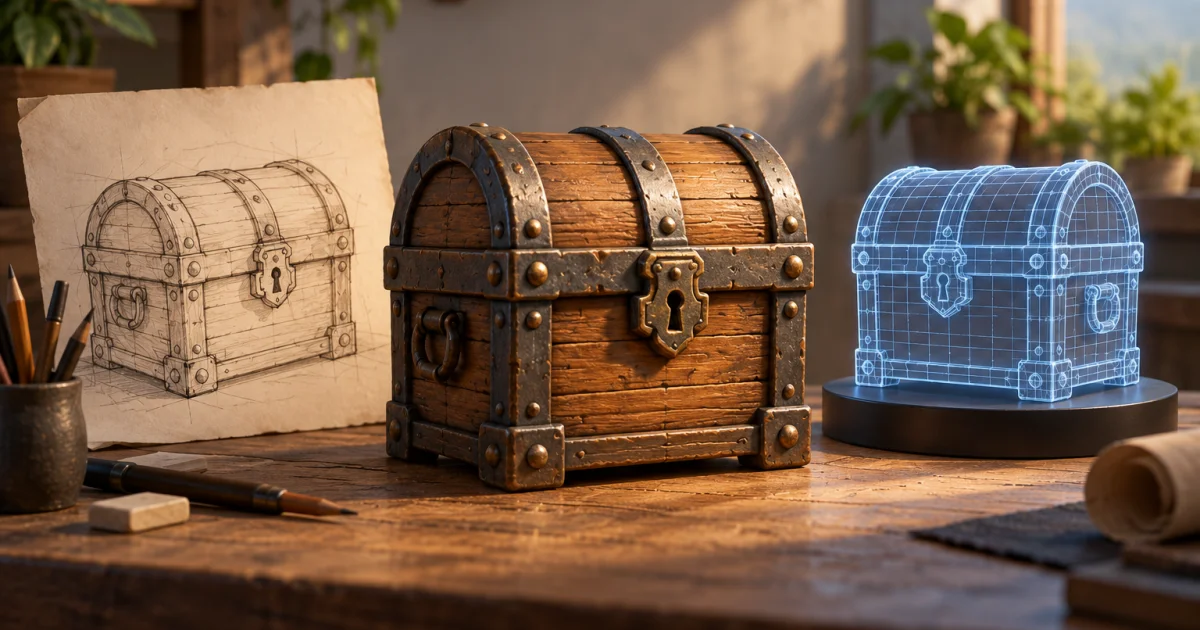
You have imagined an object for a game, a scene, or a presentation, but you still need to turn that idea into something you can see from every side. It is at this early stage of the process that Tripo AI aims to help.
The platform generates 3D models from text descriptions and images. On its website, the company presents applications in games, design, virtual experiences, and 3D printing, along with options for exporting the results. Meet Tripo AI.
How does the idea take shape?
The starting point can be a description of the object or a visual reference. The tool produces a three-dimensional representation that can serve as a basis for further work.
The formats presented include GLB, FBX, and OBJ, which are common in 3D creation workflows. The usefulness of each export depends on the program and what you intend to do with the model.
The company also offers features for controlling the mesh, the structure of polygons that forms the object's surface. The Smart Mesh page describes options related to organizing this geometry and editing it later. See Tripo's mesh features.
An example to make the idea concrete
Imagine you are building a prototype of a small village in a game and need to try out a wooden chest in the scene. In this example, you could start with a description or reference to generate an object and assess how it looks in the scene.
The first question would be simple: does it match what you imagined? Then come project details such as size, materials, and polygon count.
This process helps explain the tool's potential. An initial model can make an idea easier to discuss, compare, and adjust before investing in all the details.
What would I check in the result?
I would look at the object from several angles and check whether the geometry makes sense in the parts that are less visible in the reference. I would also test the export in the program that will actually be used.
For a game, I would observe the model's resource footprint and its appearance during use. For 3D printing, the evaluation would need to consider the requirements of the manufacturing process. The object's intended use changes the quality criteria.
Why is it worth following?
The most interesting part, for me, is bringing an idea closer to a first version that can be manipulated. This can help both people exploring a scene and those who need to communicate a visual proposal.
Tripo AI joins this series as a tool for experimenting with and developing objects in three dimensions. Its value emerges when the initial generation fits into the rest of the creative process, with room for review and finishing.
Official information consulted on 21/10/2026.