Mobile Brain: how speech becomes data and why context matters
Mobile Brain’s proposal at fswk.rio connects oral narratives, research and decisions in education, work and health. The challenge is interpreting indicators in context.
Voices depend on your browser and device; some require internet access. Code blocks are not read aloud.
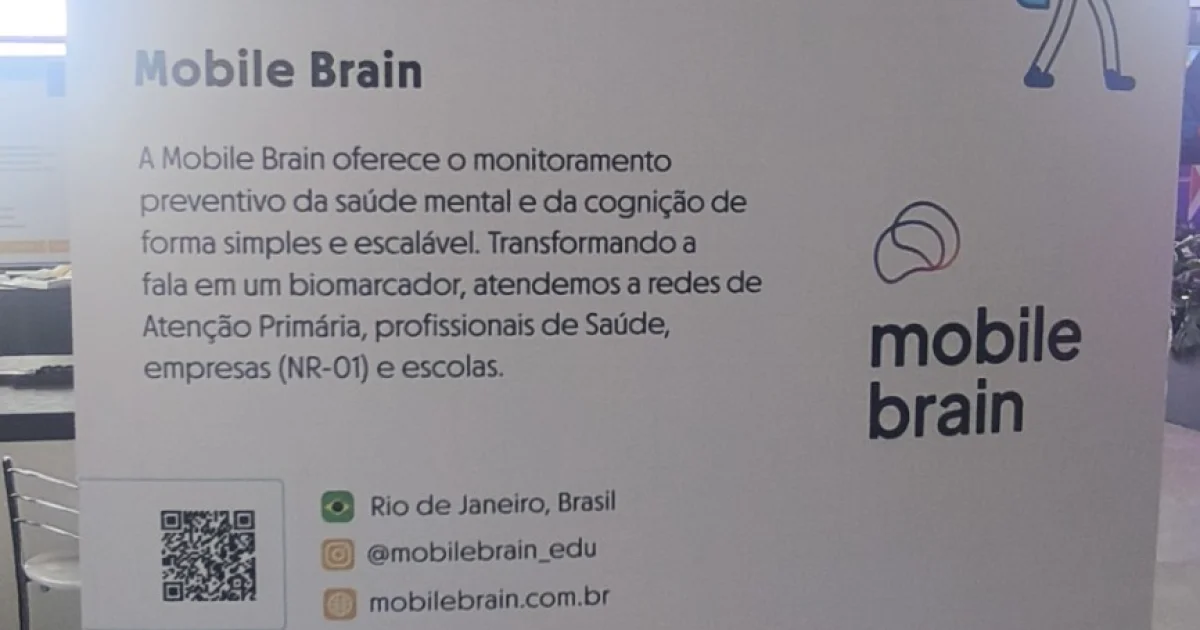
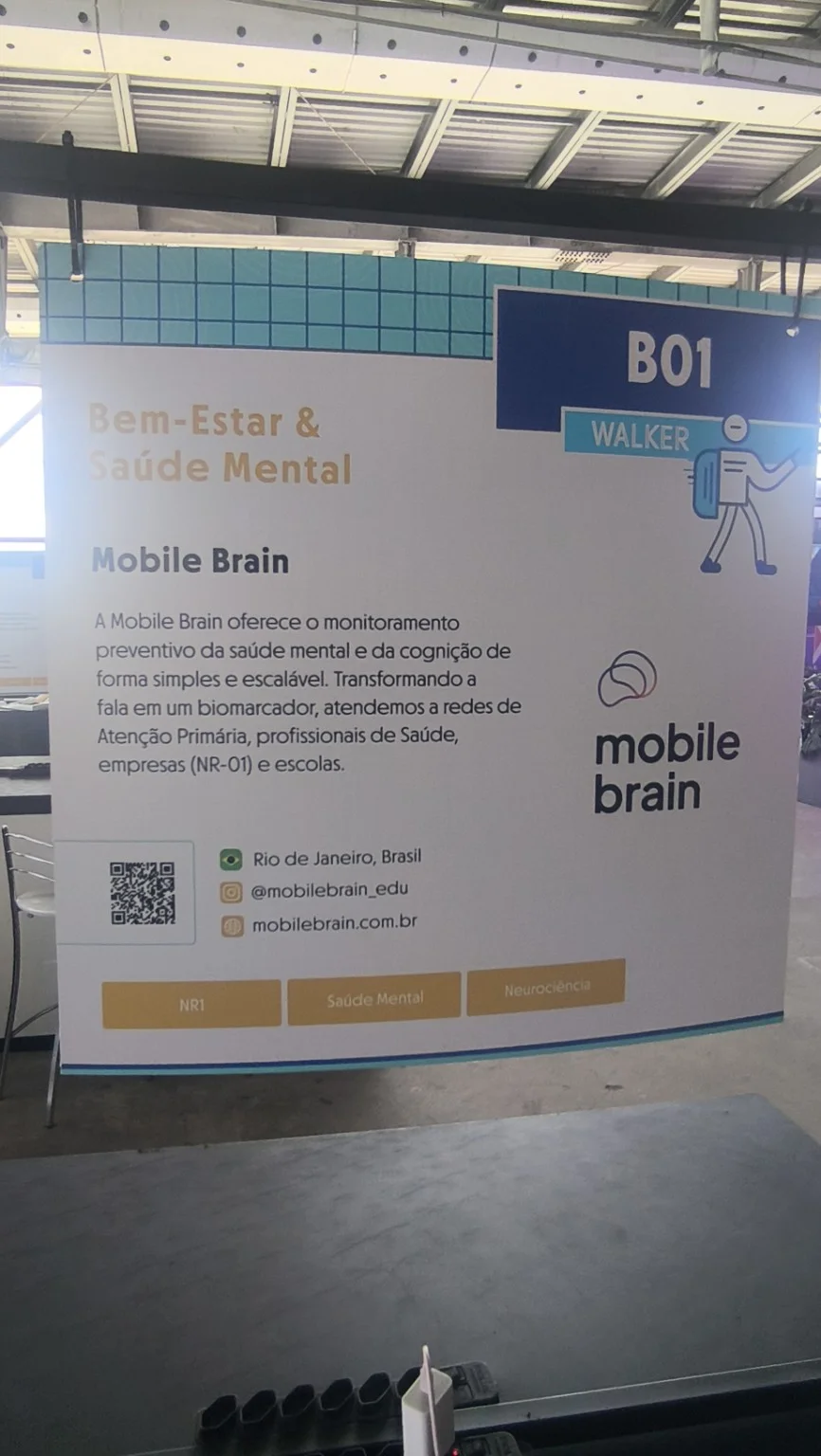
When we think of health data, tests, numbers and images often come to mind. Speech offers another possibility: turning the organization of a narrative into something that can be observed and compared. This was the subject Mobile Brain’s material brought to my records of fswk.rio on November 13, 2026.
On the company’s website, the process starts with oral narratives, moves through computational analysis and produces cognitive and psychosocial indicators, with specialists helping interpret results and propose actions. The proposal covers education, workplaces and health.
For people developing systems, this path is interesting because it exposes the distance between receiving a file and producing useful information. The microphone is only the input. Value depends on the collection protocol, interpretation and subsequent decision.
Speech contains different types of information
Analyzing a recording can mean different things. One project might work with acoustic characteristics; another might focus on words and their relationships. When assessing a solution, I would begin by clarifying the object of analysis. The phrase “speech analysis” alone does not answer that question.
One research example is the study by Natalia B. Mota and colleagues, published in PLOS ONE in 2012, investigating speech graphs in psychosis. Words are represented as nodes and relationships as connections. It is a historical methodological reference, not automatic validation of the current product.
To understand representation, we can construct a teaching example: “I went to school, came home and talked about school.” Without interpreting the speaker’s life, we can already ask questions about repetition, sequence and returns to earlier elements. Converting a sentence into a structure enables calculations; the meaning of those calculations requires its own investigation.
The question asked contributes to the result
Imagine two hypothetical recordings from the same person. In the first, they receive a familiar topic and time to organize a response. In the second, they try to discuss an unexpected subject in a noisy place. I would not treat the difference as immediate evidence of a change in the person.
This is a collection design issue. What instructions were given? Were there interruptions? Is the recording complete? Which protocol version was used? A system that stores only the final file loses part of the history needed to interpret the result.
In the interface, this means clear instructions, recording quality checks and a record of relevant conditions. It also requires an alternative when someone cannot or does not want to participate in that format. Completing a form at all costs can improve completion rates while reducing information quality.
An indicator needs a defined purpose and population
A scientific basis is an important starting point. Assessment of an application must go further, to the population, goal and version actually used. I would ask which studies support that specific output and how the result will be combined with other information.
An indicator for following an educational activity has a different destination from one presented in a health service. Transferring the same report design between settings can hide important differences in interpretation and responsibility.
I would also ask about errors. When does the tool fail to flag something relevant? When does it produce an alert that is not confirmed? How does review work? These questions replace an abstract discussion of “accuracy” with an analysis of the consequences of each output.
A publication establishes what was studied under particular conditions. The institution adopting a tool needs to understand how those conditions relate to its use. Translating research into operations deserves space in the project.
Feedback is part of the technology
Consider a hypothetical school example: an activity generates an indicator worth following up. The next screen could simply mark a student in red. I would prefer an experience explaining the limited meaning of that signal, showing the information needed for review and helping the responsible team arrange the next contact.
The family and student also need understandable feedback. Technical terms, scales without reference points and permanent labels can turn incomplete information into an assigned identity. The design should encourage questions and follow-up, with opportunities for correction.
In workplaces, the purpose needs to be equally explicit. A care initiative should explain who can access individual results, what reaches management and how participants can request clarification. My preference would be to separate individual support from aggregate reports intended for organizational decisions.
Turning data into care requires continuity
I would follow the entire chain: collection, interpretation, feedback, action and review. If a report identifies a need for attention, can the service respond? If an intervention is proposed, is there a proportionate way to follow its outcome? If the data were wrong, does the correction reach derived records?
Mobile Brain opens a relevant discussion by placing language within this chain. My interest lies in the possibility of producing information that helps professionals observe more closely and act with more context. The original account retains its value. Calculated data need to return to the conversation with the person, with understandable limits and a purpose they can recognize.