AI in emotional care: support, context and responsibility
Bud and Lilica, photographed at fswk.rio, prompt a discussion about conversation, professional assessment and product choices in emotional care.
Voices depend on your browser and device; some require internet access. Code blocks are not read aloud.
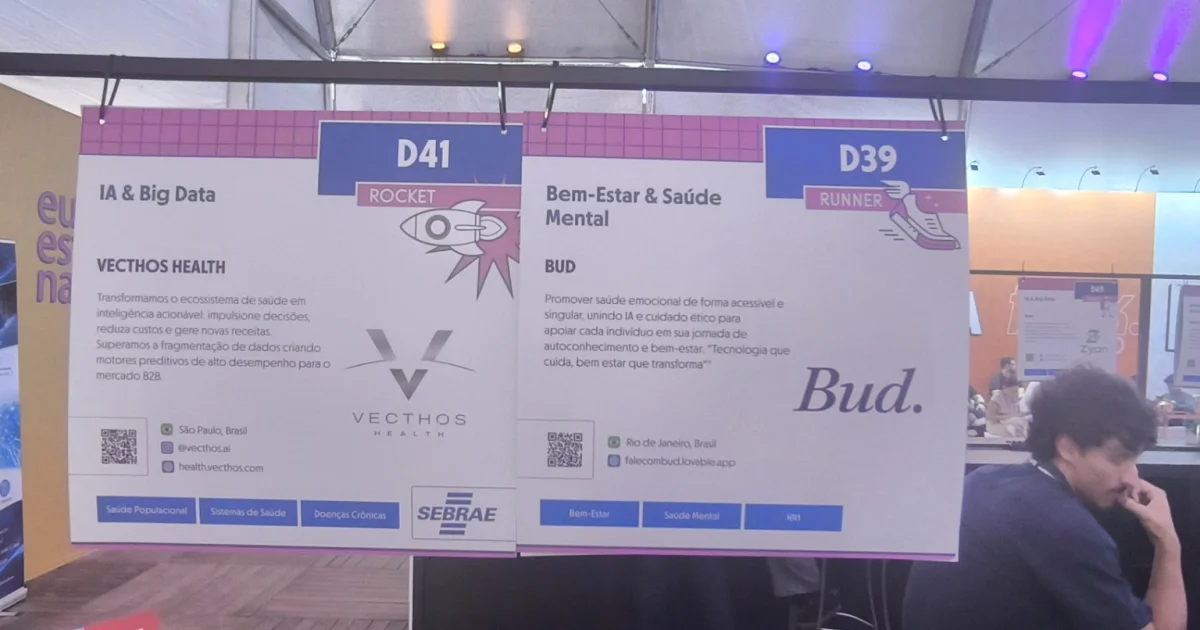
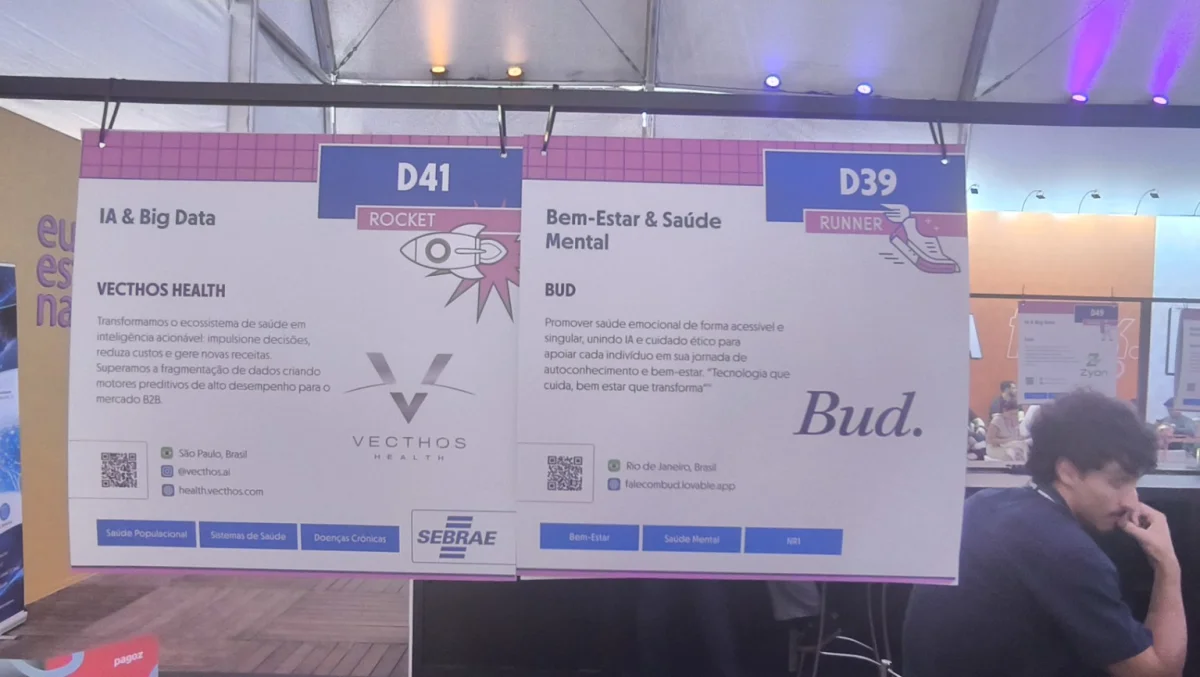
A conversation about emotional health may begin with an unfinished sentence, a question or difficulty explaining what is happening. Creating room for that account is a different proposition from organizing a clinical assessment. Both appeared in the Bud and Lilica materials I photographed during my visit to fswk.rio on November 13, 2026.
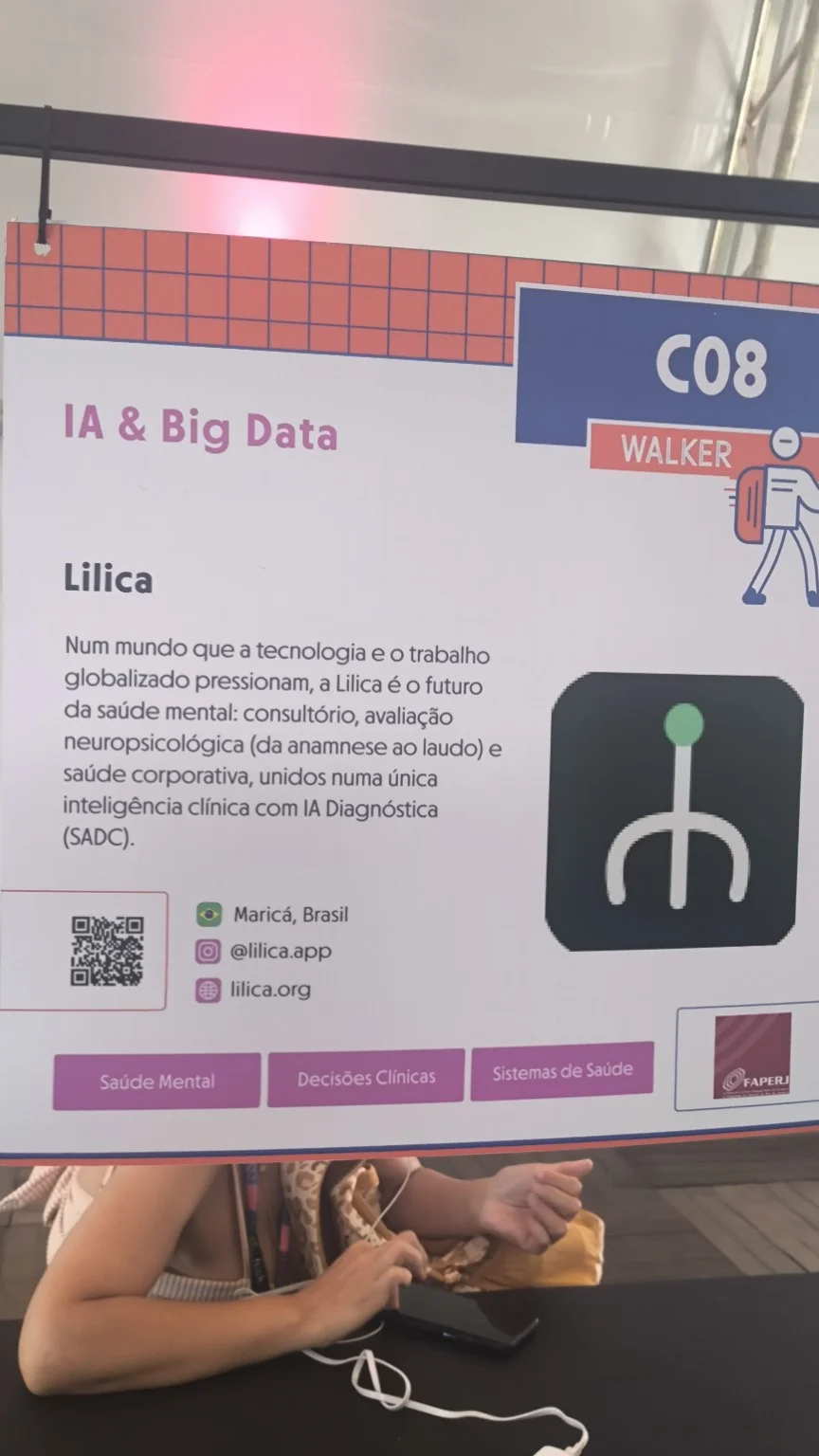
Bud’s panel presented an initiative focused on emotional health, self-knowledge and well-being, combining AI and ethical care. Lilica presented clinical practice, neuropsychological assessment and corporate health within a clinical intelligence platform. Together, they raise a very practical product question: what can a person expect from each conversation, and who takes responsibility for the next step?
A conversation needs an understandable purpose
When opening a service, people should understand whether they are organizing their thoughts, receiving general information, completing an assessment instrument or speaking to a professional. This explanation can be simple and appear at the appropriate moment. A lengthy text hidden in registration does little when the whole interface suggests intimacy and unlimited understanding.
As a developer, I would start with the agreement established by the experience. Does the system remember previous conversations? Can the person review that context? Is anyone monitoring the messages? How soon will a request for contact receive a response? Each answer changes what it means to write something sensitive there.
Consider a hypothetical situation: someone describes a week of workplace conflict and asks for help preparing a conversation with their manager. A tool could help organize the events, separate facts from interpretations and formulate questions. That goal has a starting point, a deliverable and the possibility of ending the session independently.
Support also means admitting a misunderstanding
A fluent response can communicate more confidence than its content warrants. WHO guidance on generative models in health highlights false, incomplete or biased responses and excessive trust in automation. This deserves particular attention when a conversation involves personal experiences.
In product practice, I would make room for people to correct the system: “that is not what I meant,” “this summary left something out” or “I would rather not discuss that.” A correction needs to change the context used later, instead of merely generating an apology.
It also makes sense to avoid settled interpretations based on a few messages. If a user describes tiredness, the interface need not immediately turn the account into a category. Questions proportionate to the conversation’s purpose can preserve the ambiguity people need to explain their situation more fully.
Clinical assessment has another chain of responsibility
Lilica’s banner uses the expression “Diagnostic AI (SADC).” This is the exhibitor’s description. The name alone does not establish diagnostic performance or clarify which decisions are made by software and which by a professional.
A product assessment needs to investigate that division: which data enter the system, how they are organized, what a professional reviews and how a conclusion can be challenged or corrected. An interview summary, a suggested document and an assessment result have different consequences. The interface should make those differences readable.
This connects with my discussion of AI in consultation documentation: reducing recordkeeping work can make room for the encounter, provided the professional can verify the output. Responsibility becomes clearer when each stage has an identifiable author, date and version.
Referral involves an actual operation
A button for contacting a professional completes its task only when a workflow exists on the other side. Who receives the request? What information accompanies it? Does the person choose to share the full history or a summary? Does the service confirm receipt?
In the hypothetical workplace conflict example, the user might decide to take a summary to an appointment. I would design a review before sending: the person reads, corrects and selects what to share. The record then helps start the conversation while preserving their own account.
For situations beyond the service’s scope, the product also needs responses and support routes defined with responsible professionals. The timing, wording and destination of a referral belong to the design of care, beyond the wording of an automated message.
The outcome can be leaving the screen
I would evaluate this kind of tool against goals meaningful to its users: expressing a need, preparing a conversation, finding care or better understanding the service’s limits. Usage time alone says little about those outcomes.
A short, successful session is easy to imagine: a person organizes what they would like to say, saves their notes and continues with their day. A product oriented toward care should recognize that outcome as positive, without trying to extend the interaction artificially.
In my records of the event, Bud and Lilica brought different parts of this journey into view. The challenge for those building technology is to design reliable connections between conversation, context and responsibility. A good experience lets people know whom they are speaking with, correct what was understood and choose how to continue.
Sources and further reading
- Bud and Lilica materials photographed by the author at fswk.rio and reproduced in this article.
- WHO — ethics and governance guidance for generative models in health.
- Ernani.dev — AI in consultation documentation.