Shaped: what information can a body image produce?
The body-scanning presentation by Shaped at fswk.rio opens a discussion about image capture, estimates, comparisons and the presentation of results.
Voices depend on your browser and device; some require internet access. Code blocks are not read aloud.
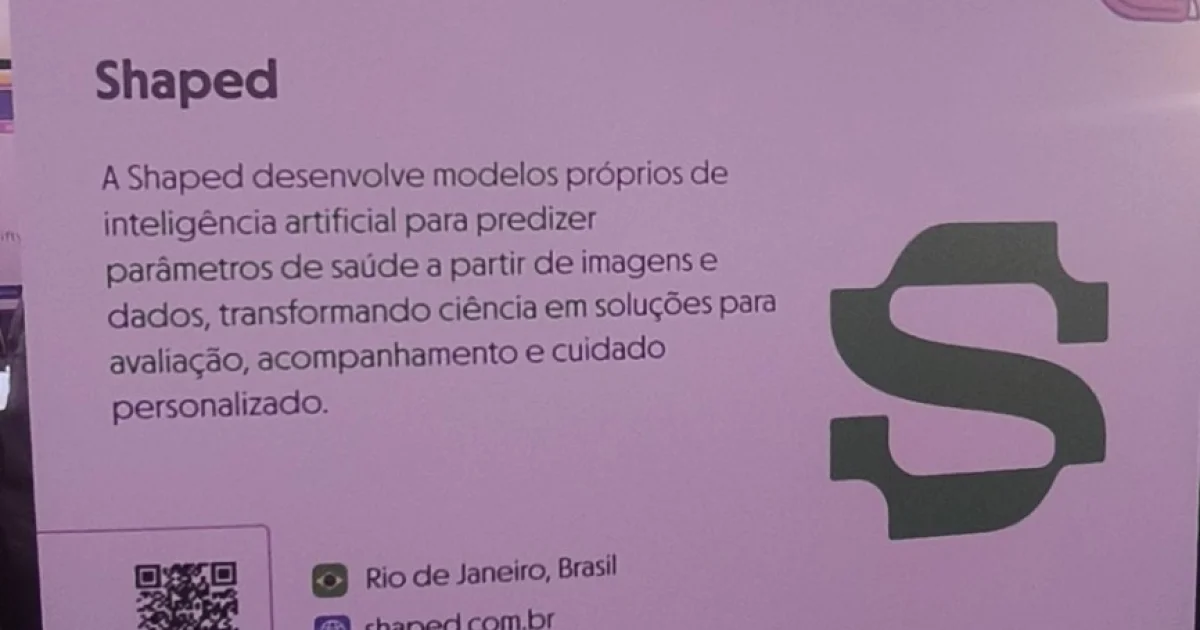
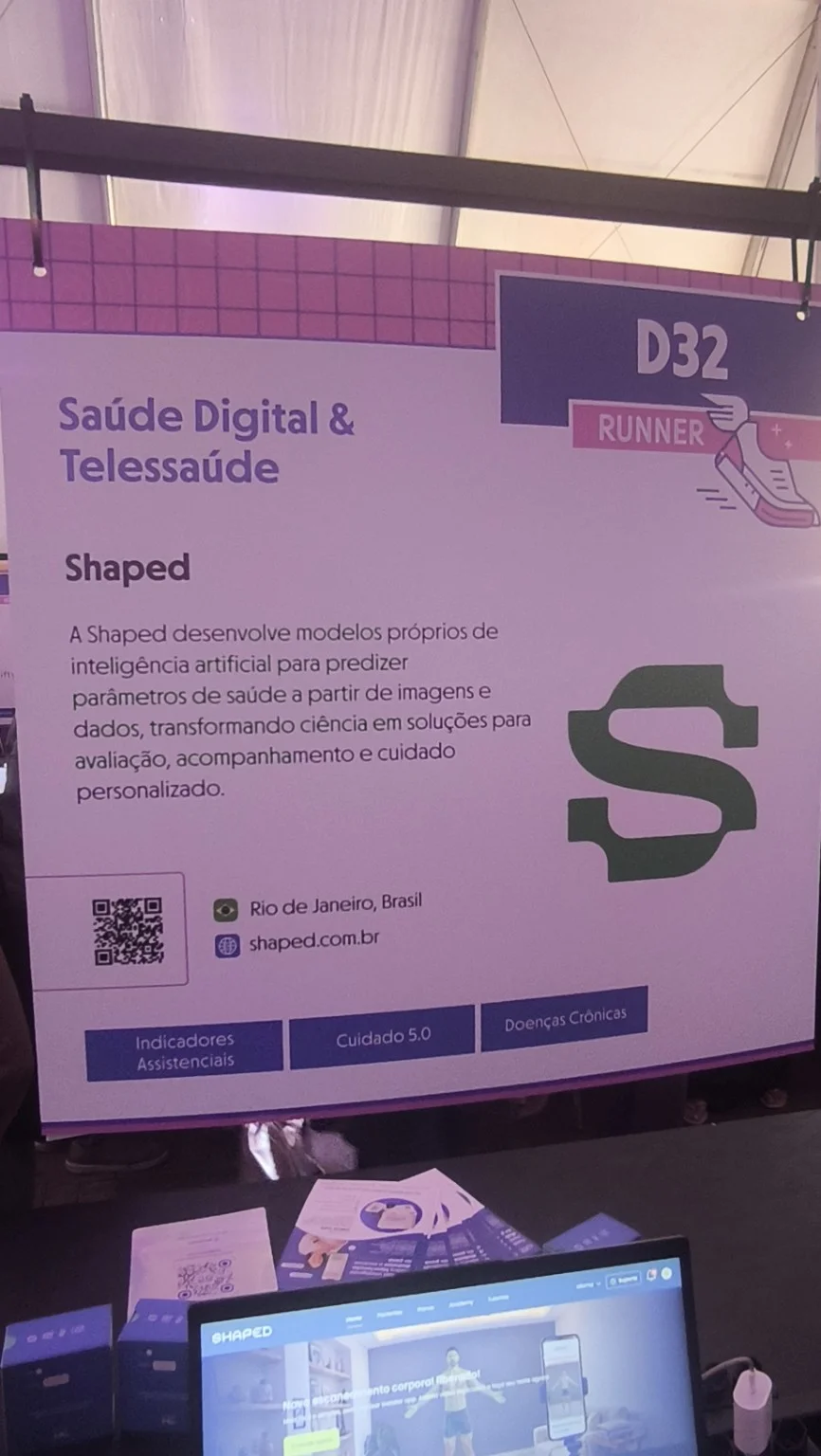
At Shaped’s stand during fswk.rio on November 13, 2026, I photographed a proposal connecting images, data and body assessment. Its banner presents proprietary artificial intelligence models for estimating health parameters; the visual demonstration included a phone-based body-scanning workflow.
This kind of interface compresses a great deal into an apparently simple gesture: positioning the body and producing images. For software developers, it is worth unpacking that sequence to understand the inputs, transformations and presentation of results. My visit documented the proposal; it did not include an accuracy study of the tool.
Capture is already part of the usage model
An image-based application needs to guide production of the input it expects. When designing such a product, I would start by clarifying camera position, framing and accepted capture conditions. The aim would be to reduce the gap between the image the system expects and what someone can produce at home.
Consider a hypothetical example: the same person makes two captures with the phone in different positions. Before interpreting differences in the results as a bodily change, it would be necessary to understand whether those images are comparable for that tool.
This suggests an interface that checks quality and explains when a capture must be repeated. A message should identify an actionable problem, such as incomplete framing, rather than simply saying “invalid image.” Users need to know how to proceed.
From visible information to an estimate
I would want results to clearly distinguish information supplied by the person, characteristics extracted from the image and parameters estimated by the model. These elements may appear together, but have different origins.
If a report presents an estimate, its description should explain its purpose and the conditions for using it. A number with decimal places does not, on its own, explain uncertainty. The interface needs to communicate an indicator’s meaning without requiring users to guess the method.
The same attention applies to comparisons over time. A model version change may alter how a result is calculated. Keeping the version and capture conditions helps investigate differences, particularly when someone consults a history of assessments.
What would make an evaluation convincing
The good machine learning practice principles presented by the FDA address evaluation across the lifecycle. The principles document includes data representativeness and separation of training and testing. This reference does not constitute approval of Shaped.
For a particular tool, I would ask which result was compared with which reference. I would also examine who participated in the evaluation and which conditions were outside its scope. This helps recognize the reach of evidence without expecting a solution to promise universal performance.
A study can answer a bounded question well while leaving others open. Product reporting should make that interpretation possible. A result becomes more useful when accompanied by the context in which it was obtained.
Experiences involving one’s body deserve care
Every chart and classification involves language choices. As a design proposal, I would avoid presenting changes without explaining their meaning or building an experience solely around comparisons between people. Follow-up should reflect the purpose established with the professionals involved.
People also need to understand where their images go. Who can view them? How long are they available? Is storing a photograph different from storing an indicator extracted from it? These are questions I would bring to implementation, and they deserve accessible answers in the interface.
For this article, I chose the banner from my event records. Discussing the technology does not require exposing an individual report visible on a table or assuming that its data is fictional.
A product testing route
I would begin with a usability assessment using authorized cases and a defined purpose. I would observe understanding of instructions, repeated captures and the ability to interpret the result. Accuracy assessment would be tied to the appropriate method and qualified team.
Then I would follow how support handles a disputed result. Can the person challenge it? Can staff locate the input and processing version used? Is there a way to explain or correct the record? This review process is also part of quality.
Shaped’s proposal interests me because it makes the connection between image and information visible. A good product needs to keep that connection understandable: show what it received, what it estimated and under which conditions to interpret the result. That clarity gives users and professionals a better basis for deciding how to use the tool.
Sources and further reading
- Shaped: website displayed by the exhibitor.
- FDA: Good Machine Learning Practice.
- 2021 principles for machine-learning medical device development.
- Banner and visual presentation photographed by the author at fswk.rio on November 13, 2026.