Technology against bullying: from a report to the school’s response
Icapiedu/I-CAPY’s proposal at fswk.rio invites a closer look at listening, referral and follow-up channels that make a difference in school routines.
Voices depend on your browser and device; some require internet access. Code blocks are not read aloud.
A school can have a digital reporting channel and still leave a student without an answer. Between sending a message and protecting someone who asked for help lies work involving people, schedules, decisions and continuity. This is where I would focus when assessing technology intended to address bullying.
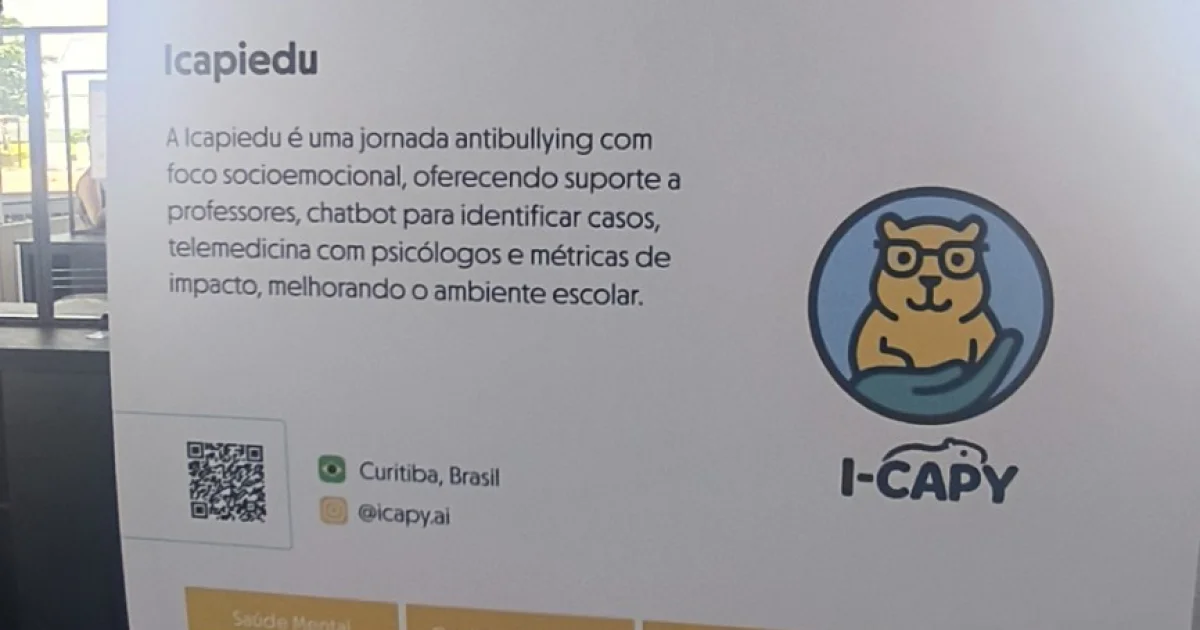
At fswk.rio on November 13, 2026, I photographed Icapiedu’s panel, displaying the I-CAPY brand. The material presented an anti-bullying journey with a socio-emotional focus: teacher support, a chatbot for identifying cases, remote psychologist appointments and impact metrics. This is the exhibitor’s proposal; this article explores how such a journey needs to work in everyday practice.
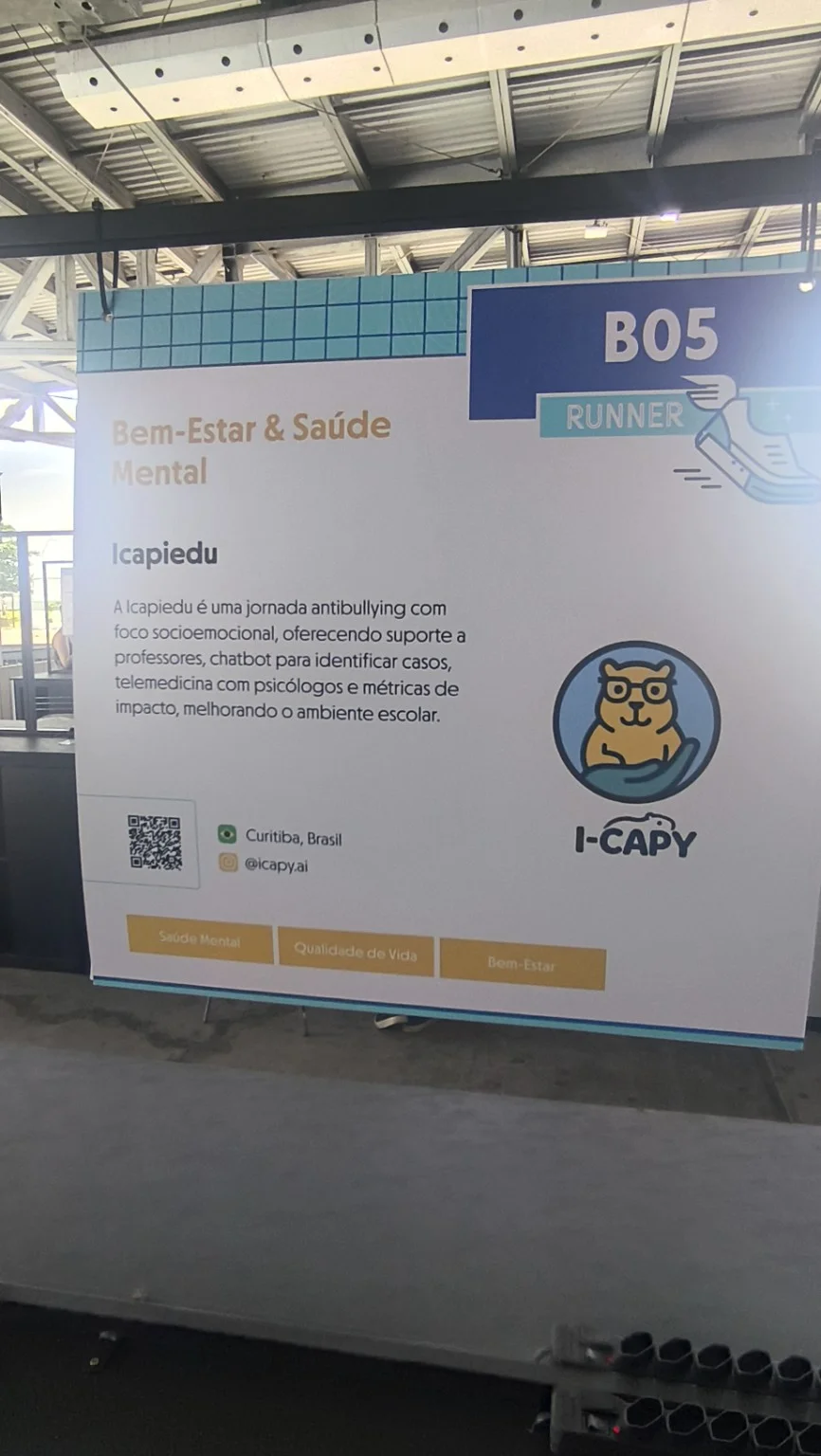
The entry point should help someone who cannot yet explain
A student might begin by saying “I don’t want to come back tomorrow,” without using the word bullying. The form should let them describe what they can, in age-appropriate language, and understand who may receive the information. Too many required fields can make a request for help difficult to complete.
I would design the entry point with short questions, the ability to pause and an option to contact a person directly. I would also make monitoring hours visible. An interface available around the clock does not mean immediate human assistance exists.
Confidentiality needs an honest explanation. Promising absolute secrecy and later forwarding a report breaks an expectation created by the service itself. The school needs to define, with its responsible team, which information will be shared and how to explain this to the student.
Identifying a signal starts an assessment
UNESCO describes a comprehensive response to school violence, involving training, a safe environment, reporting mechanisms, support, participation and monitoring. This helps position a chatbot within a broader structure of care and school relationships.
In my view, a system-generated signal should reach someone equipped to interpret it. Automated classification can support initial queue organization, but should not act as a verdict on those involved. The account needs to be preserved for review, with room for additional information and corrections.
Imagine a hypothetical case in which a student describes repeated exclusion from activities by peers. The tool can organize the request and alert the team. The school must understand the situation, support the student and manage its response. Automation should facilitate that work without closing the investigation with a label.
A referral needs an accountable person
The Brazilian Education Ministry’s guide to bullying and cyberbullying covers support, recordkeeping, family communication and coordination with protection services. For systems design, this suggests a practical requirement: every referral needs a verifiable destination.
I would organize the workflow with an assigned person, a next-contact date and a record of completed actions. “Sent” is a technical status; “received by the team, awaiting follow-up” communicates the progress of care more clearly. When the responsible professional is absent, the task needs an alternative path for continuity.
The student also deserves an answer consistent with what can be disclosed. They do not need details about other people to know they have been heard and that follow-up will happen. A careful response can explain the next contact and whom they can speak to.
Schools need process visibility without exposing children
Different people have different information needs. Someone receiving a report may require details that should not appear on a general management dashboard. A teacher implementing a support measure may need to know the agreed action without accessing the entire history.
This division should appear in product permissions. I would also consider what happens outside the main screen: exports, phone notifications, emailed attachments and printed reports. Carefully configured access loses its effect if a notification displays sensitive content to anyone nearby.
In the hypothetical example, a follow-up dashboard could show a pending task to the responsible team without disclosing the account throughout the school. A project becomes clearer when it begins with the decisions each role needs to make and then determines which data to provide.
Measuring impact requires interpreting everyday practice
A rise in reports can have different interpretations. More incidents might be occurring; alternatively, students may have learned about the channel and become more willing to use it. Before presenting the graph as improvement or deterioration, I would investigate these possibilities with the school community.
To evaluate operations, I would track time to first response, referral continuity, unassigned tasks and students’ understanding of the channel. These indicators need to be combined with listening and assessment of actions, without ranking children or classes as “problematic.”
I would also look at whether the school can learn from environmental patterns: places requiring attention, times when supervision is insufficient and training needs. Collective use of information should lead to changes the community can perceive.
Continuity defines the tool’s value
I-CAPY’s proposal is a relevant starting point because it brings together stages often discussed separately: listening, teacher support, care and evaluation. For me, the decisive question is how these components connect when someone actually needs them.
A good project can show the path from a report to follow-up, with understandable responsibilities and school community participation. Technology contributes when it makes that path more accessible, reduces omissions and enables review of the response. A student asking for help needs to find a school able to continue the conversation.
Sources and further reading
- Icapiedu/I-CAPY material photographed by the author at fswk.rio and reproduced in this article.
- UNESCO — school violence and bullying.
- Brazilian Ministry of Education — quick guide to responding to bullying and cyberbullying at school.