Personalized prevention has to fit real life
Onami’s proposal at fswk.rio prompted me to think about care plans, routines and follow-up: how can a product help turn intentions into achievable actions?
Voices depend on your browser and device; some require internet access. Code blocks are not read aloud.
A plan can be well presented and still be difficult to put into practice. Schedules change, transport takes longer, family responsibilities arise. When I think about follow-up products, I want to understand how they handle the life that happens after the first recommendation.
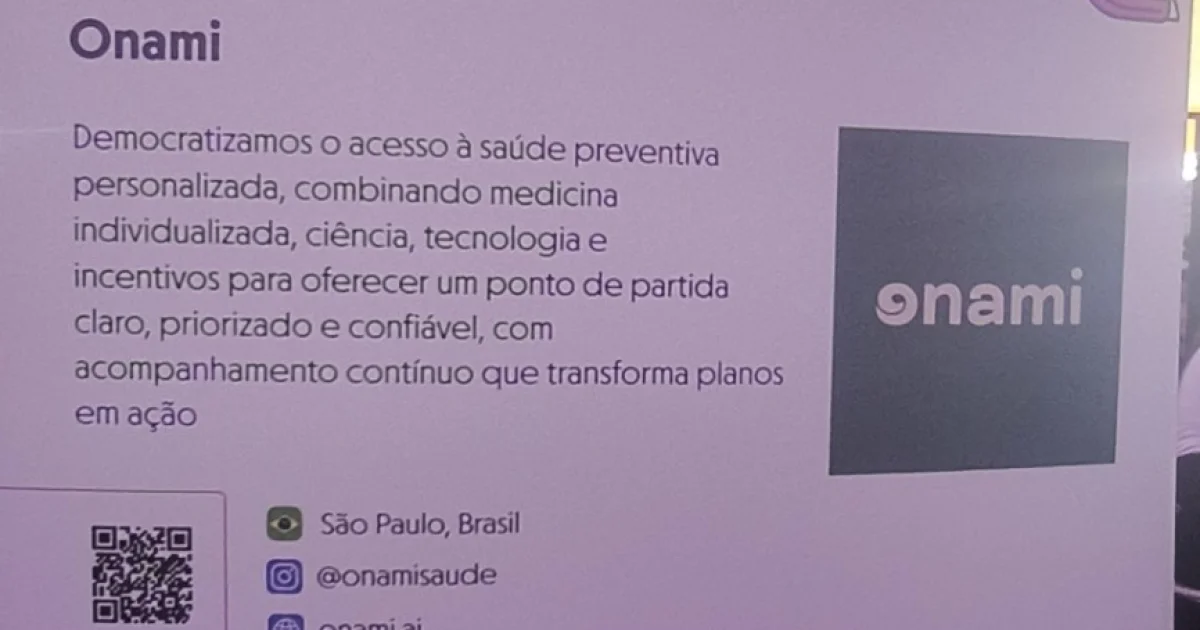
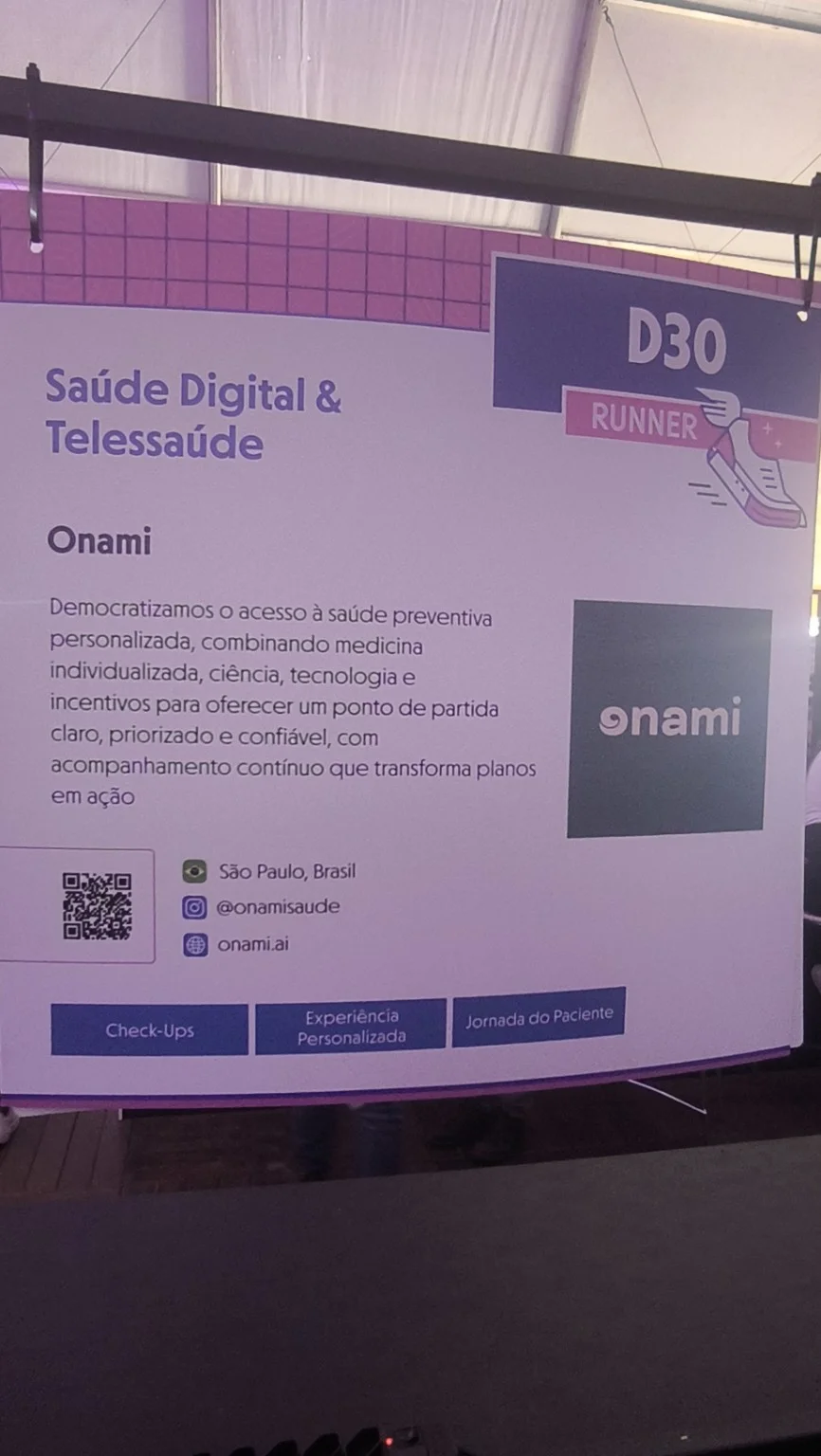
The Onami banner I photographed at fswk.rio on November 13, 2026 presents a proposal for personalized preventive care, priorities and continuous follow-up. It provided a starting point for discussing service design. The reflections below are product criteria, not a clinical assessment of the company.
Personalization begins with the right question
Putting someone’s name into a message is a limited form of personalization. For a plan to be useful, I would expect the service to help understand that person’s goals, difficulties and practical options, within the responsibilities of the professionals involved.
Consider Carolina, a fictional person who works changing shifts and cares for a relative. She may agree with a recommendation but find it difficult to carry out at the initially agreed time. A product that simply repeats a reminder learns little about what is happening.
I would prefer follow-up that lets her explain that difficulty and review the plan’s organization with staff. Carolina’s participation would have a practical consequence. The service could adjust contact arrangements and help organize the next step without independently deciding clinical changes.
Priorities are a shared decision
A screen containing many recommendations may leave someone unsure where to begin. In the design I would choose, each action would have an understandable purpose, a responsible party and a clear way to obtain help.
This does not mean reducing care to a universal checklist. It means showing how the plan was organized for that case. An interface could distinguish an outstanding administrative task, a professional recommendation and a question that still needs clarification.
The WHO approach to people-centred services considers needs, preferences and continuity of care. My product interpretation is that these qualities need to appear in everyday service decisions, including when a user requests a change.
Useful follow-up makes room for interruptions
Continuity deserves to be designed around periods of absence, phone changes and difficulty responding. People should be able to resume follow-up without reconstructing their entire history or confronting a stream of demanding messages.
In Carolina’s example, I would want staff to distinguish misunderstanding, a scheduling barrier and a decision to postpone a step. These situations call for different conversations. A counter showing days without a response does not explain the interruption by itself.
I would also pay attention to language. Messages can ask what made an action difficult and offer a route to assistance. The product should avoid turning every difficulty into a score judging someone’s behaviour. Useful information helps reorganize care.
Progress must mean something to participants
In an experience evaluation, I would ask users what they understood about their plan and what their next step would be. Those answers can reveal problems that an app-opening metric does not show.
On the operational side, I would track resolved requests, actual contacts and the time needed to obtain guidance. Clinical indicators, when applicable, require definition and assessment by responsible professionals. The platform should make the distinction between completing an app task and observing a health change recognizable.
I would also examine how staff revise priorities over time. A plan may need reorganizing when someone’s circumstances change. Keeping a history of those revisions helps explain why a current recommendation differs from an earlier one.
A proposal needs an operating routine
Onami’s material talks about turning plans into action. To assess that idea in an implementation, I would begin with a bounded group and objectives, observing how staff receive questions and respond to difficulties. I would examine the entire service, from the first conversation to follow-up.
A good evaluation plan would include someone who uses everything easily, someone who needs support and someone who interrupts contact. Learning would come from differences between these journeys. This is an evaluation proposal, not a description of a pilot I conducted with the company.
What interests me is the possibility of software helping organize more understandable care relationships. People need to know why an action was suggested, how to carry it out in their circumstances and whom to contact when a plan does not fit their routine. Personalized prevention gains meaning when that conversation remains available beyond the opening screen.
Sources and further reading
- WHO: integrated people-centred services.
- Onami banner photographed by the author at fswk.rio on November 13, 2026; website displayed in the material: onami.ai.