Remote examinations depend on a well-connected care operation
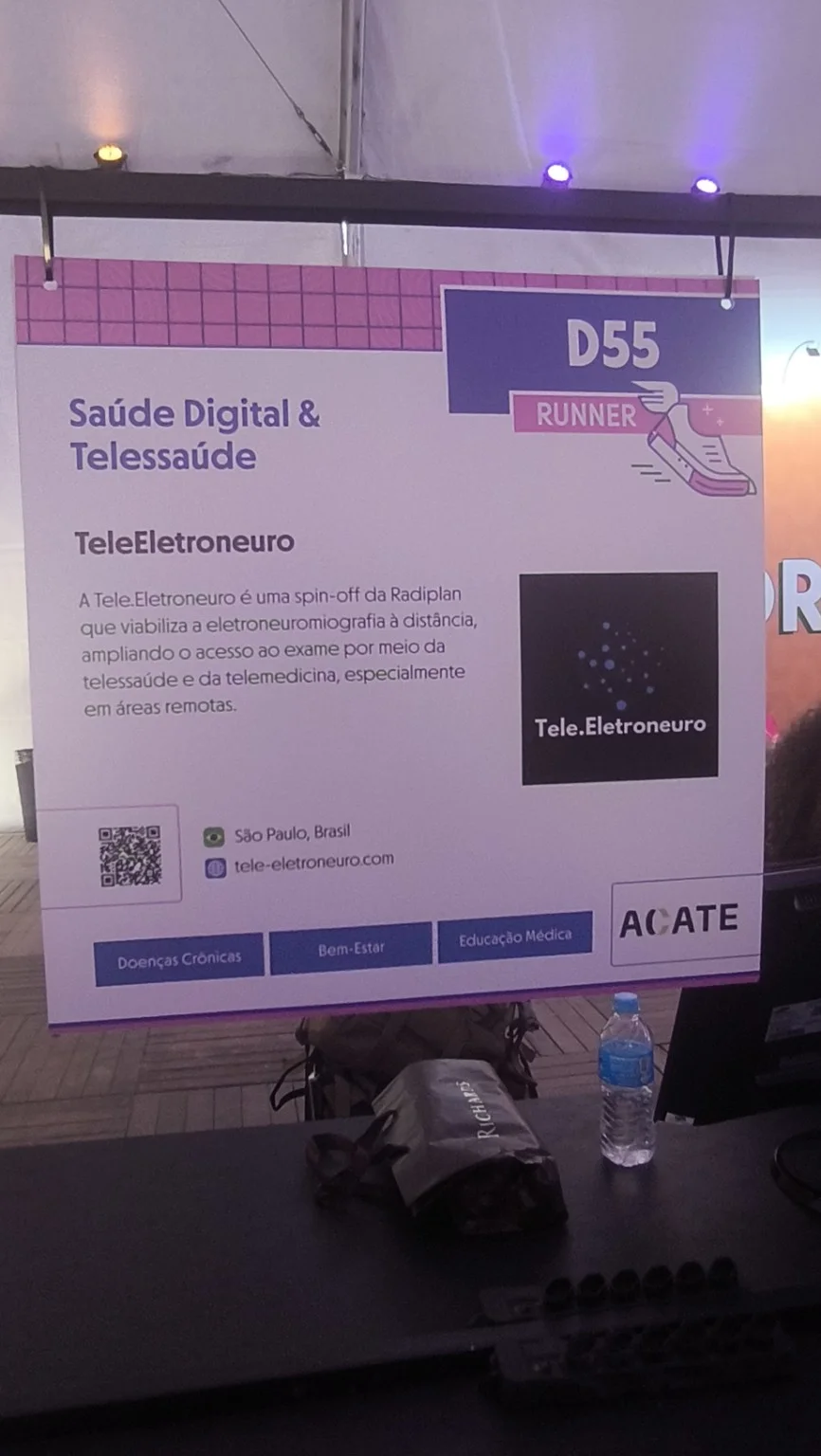
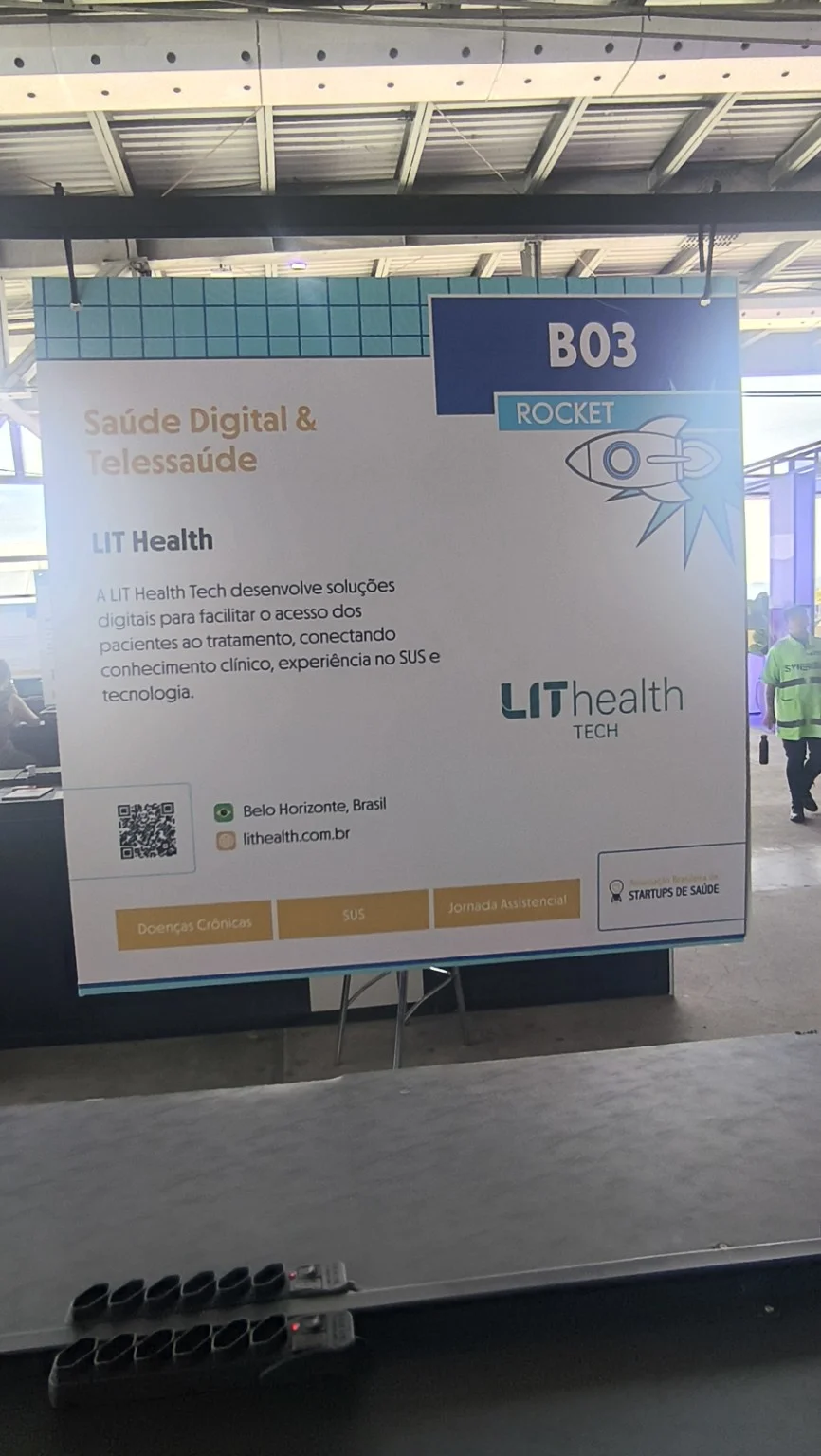
TeleEletroneuro and LIT Health, photographed at fswk.rio, help explore the journey from data acquisition to professional assessment and access to care.
Voices depend on your browser and device; some require internet access. Code blocks are not read aloud.
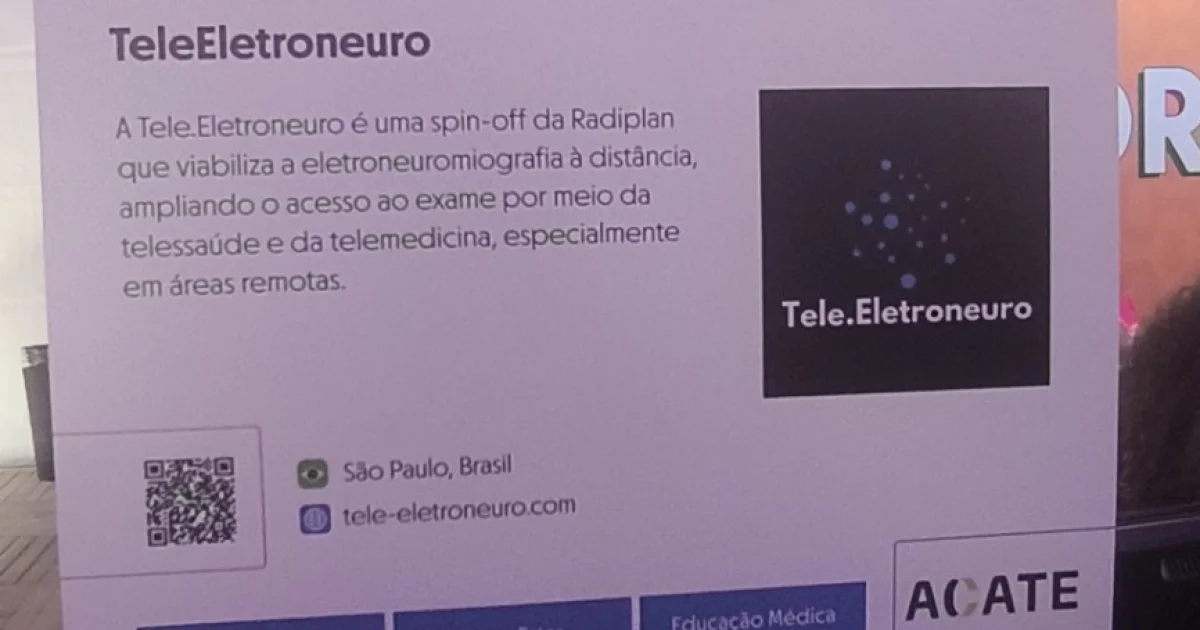
Remote care is often represented by a screen with two people talking. During my visit to fswk.rio on November 13, 2026, TeleEletroneuro’s presentation offered another perspective: organizing an examination-related service with stages performed in different locations.
Along the same route, I photographed LIT Health, whose material addressed access to treatment. The two proposals help frame a broader question: when information travels, how can care remain organized for the person who needs it?
What is being presented
The TeleEletroneuro website describes a Radiplan project involving local acquisition of graphical records, submission to a platform and remote reporting by a qualified physician. This is the provider’s service description; it does not establish that every component of any examination can be performed in the same way.
Brazil’s Federal Council of Medicine describes telediagnosis as issuing a report or opinion from transmitted graphs, images and data, requiring medical qualification in the relevant area. This framework helps recognize the professional work and care organization surrounding file transmission.
To evaluate a specific application, I would begin by understanding its indication, procedural scope and local and remote responsibilities. Those definitions belong to the qualified team. Development must translate them into a comprehensible, verifiable workflow.
A file needs to arrive with context
Imagine a hypothetical unit submitting a record without the correct procedure identification. The file may be intact and still prevent the recipient from completing their work. Transmission has solved only part of the task.
I would design submission around fields and checks defined with the care team. The system would need to connect the person, request, procedure, origin and acquisition time. It should also identify missing information before treating a record as ready for assessment.
Receiving, checking and accepting material are distinct stages. Each deserves its own state. That lets the local unit know whether submission is complete and whether the remote professional has requested additional information.
The local team remains central
When discussing access, it is easy to focus on the specialist receiving the data. I would also examine the resources of the people performing the local stage: appropriate training, equipment, environment, support and ways to resolve questions.
An implementation test should follow an entire request. Who books it? Who explains the procedure to the person? How is a difficulty communicated? Who follows up a pending issue? Operations staff need to know the answers, beyond their appearance in a contract or presentation.
For me, a successful technical connection enables teams to coordinate their work. Software needs to make dependencies visible and provide a way to resolve them without scattering documents across improvised channels.
The journey continues after the report
LIT Health presents digital solutions, consulting and education for the sector. The question prompted by its banner is what happens when a result becomes available: who receives it, how they obtain guidance and how the next appointment is organized.
I would avoid considering a process complete simply because a document was generated. The service should define what it delivers to the person and to the professionals following the case. That includes explaining how to access the result and where to ask questions, according to the care arrangements in place.
In a hypothetical situation, someone might obtain an examination closer to home and still struggle to book a follow-up appointment. Measuring only transmitted files would leave that stage invisible. The complete journey provides better questions for assessing access.
Evaluating a service through its stages
I would track submission and issue-resolution times, the need to repeat stages and understanding of instructions. I would separate these operational measures from clinical quality assessment, which requires its own criteria and responsible professionals.
I would also examine how the system records corrections, document versions and access. When several teams participate, reconstructing the sequence of work helps both continuity and investigation of a problem.
The TeleEletroneuro and LIT Health presentations reinforce a useful product-development question: reducing distance requires coordination of people, information and responsibilities. The upload screen is one stage. A service becomes understandable when every participant knows what they received, what they must do and what comes next.
Sources and further reading
- TeleEletroneuro: project overview.
- LIT Health: solutions and services.
- CFM: telemedicine regulation and modalities.
- Materials photographed by the author at fswk.rio on November 13, 2026.