From smartwatch to follow-up: who turns data into care?
CINCO’s proposal at fswk.rio combines devices and digital follow-up. The product challenge lies between a measurement and an understandable action.
Voices depend on your browser and device; some require internet access. Code blocks are not read aloud.
A scale records a value. A watch gathers information throughout the day. An app receives the data. What happens next?
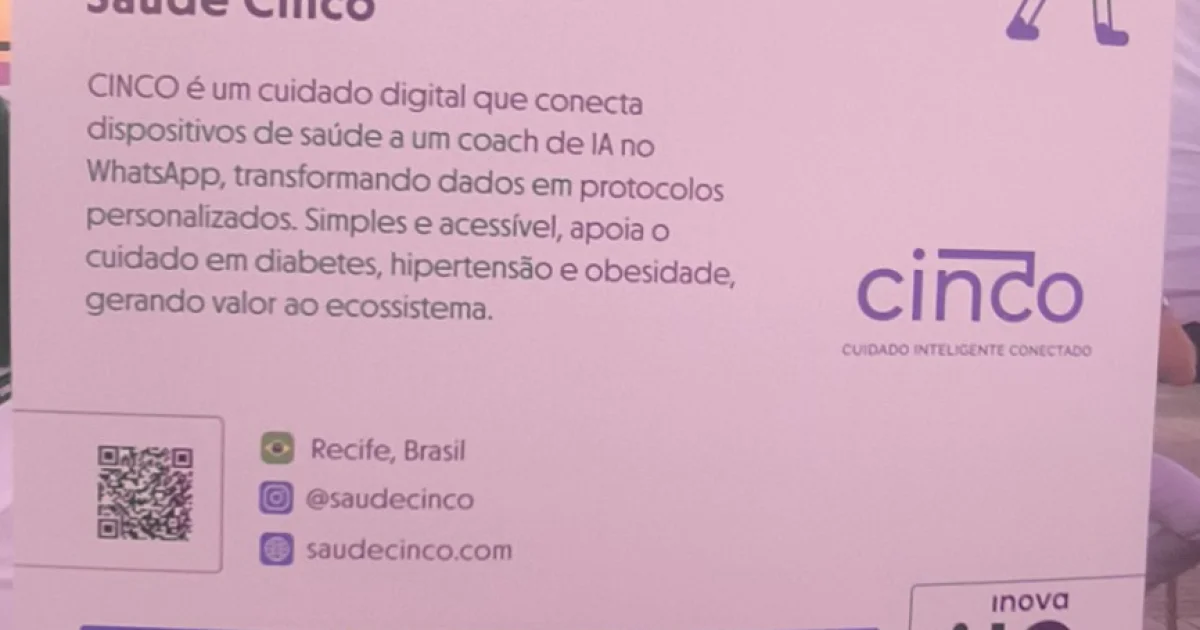
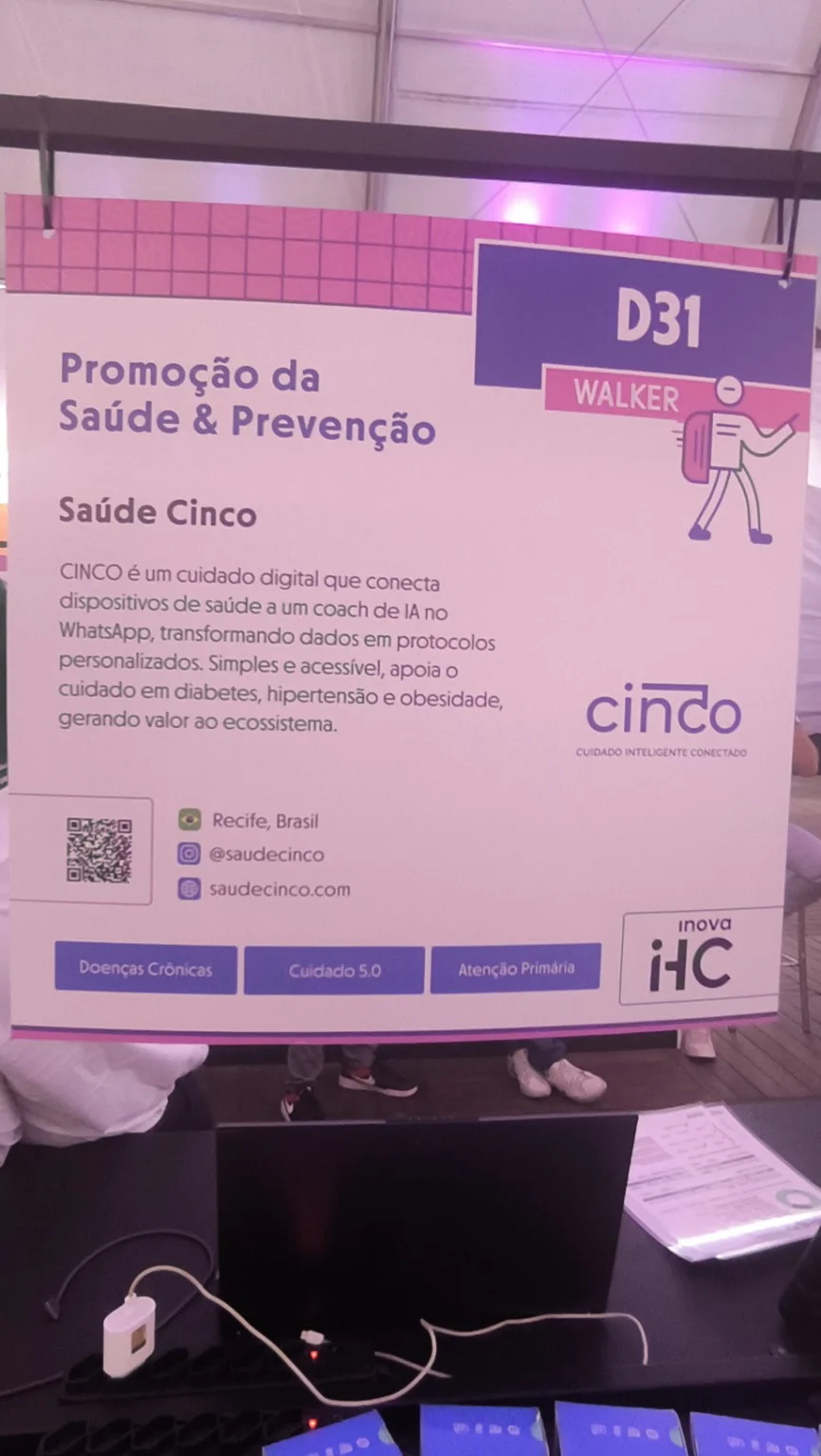
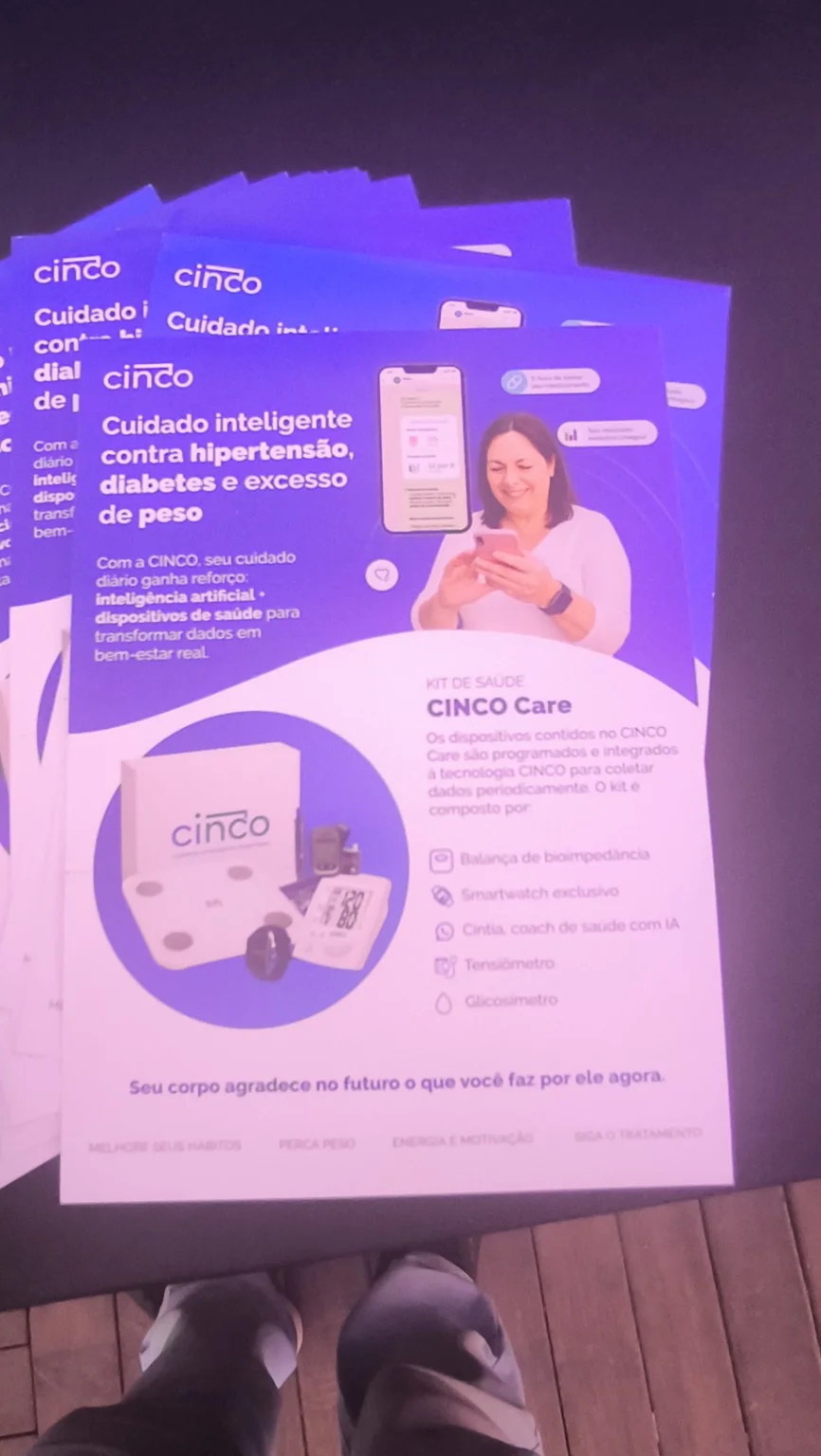
That is the product question I developed from CINCO’s material, photographed at fswk.rio on November 13, 2026. Its leaflet presents health devices connected to AI-assisted follow-up, including a WhatsApp assistant. The proposal provides an opportunity to discuss the distance between collecting information and building a service that uses it well.
Equipment is one part of the journey
On CINCO’s website, the company describes a combination of devices, conversation and professional involvement. I treat this as the provider’s presentation. I have not tested its devices or assessed the platform’s clinical outcomes.
As a developer, I would map the journey from the measurement’s origin. I would need to know which device produced a value, when, in which unit and to whom it was assigned. These details can seem minor in an interface, but they help interpret a history and investigate unexpected information.
A hypothetical example illustrates the point: someone uses a device, loses connectivity and synchronizes the records later. The system should distinguish measurement time from reception time. Sorting everything solely by arrival at the server may present a different sequence from the one that occurred.
Measuring, transmitting and displaying are different tasks
Information can be produced by one device and merely displayed by another. Users need to understand that difference, particularly when an interface combines several sources.
An FDA communication about watches and rings distinguishes devices claiming to measure glucose independently from apps displaying data received from appropriate equipment. That distinction is useful when assessing product descriptions; the communication does not evaluate CINCO.
In any solution demonstration, I would ask to see each indicator’s origin. A dashboard should make that easy to check. It should also explain when a value was estimated, manually entered or received from equipment, according to the service’s actual operation.
An alert needs to reach someone
Before configuring a notification, I would define who receives it, during which hours and what workflow it begins. This discussion must involve the professionals responsible for follow-up: clinical rules cannot be improvised by the development team.
The software questions are operational. Was the alert delivered? Did someone take responsibility? Was contact made? Why was the pending task closed? A record of these stages helps track the work without confusing a sent message with completed care.
I would also create clear states for missing data. A device with a depleted battery and a person choosing not to use it represent different situations. The platform needs to help staff understand context without automatically turning every silence into a clinical interpretation.
Participants’ routines deserve attention
I would evaluate the service with people who have different habits and levels of digital familiarity. Charging a device, responding to a message and requesting help are part of use. An implementation should observe whether these tasks fit the routines of invited participants.
The interface also needs ways to explain interruptions. Someone may change phones, travel or need synchronization support. If the product’s only response is to repeat the same reminder, it misses an opportunity to understand the difficulty.
In a guided evaluation, I would use fictional scenarios involving intermittent connectivity, duplicate records and device changes. I would observe whether data remains correctly associated and whether staff can resolve problems without requesting excessive information from users.
What belongs in the results
I would separate operational measures from measures of effect. Availability, received records and response time describe aspects of operation. Health changes require appropriate evaluation, with methods, context and responsible professionals.
This separation helps create a pilot with honest questions. An integration might work while staff receive more pending tasks than they can handle. A simple support step might also improve use. Those findings guide changes without anticipating a clinical conclusion.
CINCO provides a case for thinking about what happens between consultations and devices. The principle I would take to any similar product is to follow the entire cycle: data origin, presentation, responsibility for the next step and feedback to the person. Along that path, a collection of measurements can begin to become an understandable service.
Sources and further reading
- CINCO: platform overview.
- FDA: distinguishing glucose measurement from data display on watches.
- Banner and leaflet photographed by the author at fswk.rio on November 13, 2026.